
Alchemised is SenLinYu’s standalone dark fantasy novel about a healer with missing memories, a war-ravaged nation ruled by necromancers, and the dangerous secrets tying her to the High Reeve who holds her captive. It combines dark fantasy, fantasy romance, political horror, and a detailed alchemical magic system built around bodies, memory, power, and survival. Below is complete breakdown of Alchemised by SenLinYu Summary: Ending Explained.
Spoiler note: The opening sections are spoiler-free. The plot-summary and ending sections are clearly marked for readers seeking Alchemised spoilers.
Alchemised at a Glance
| Detail | Information |
|---|---|
| Author | SenLinYu / Sen Lin Yu |
| Title | Alchemised |
| Genre | Standalone dark fantasy with fantasy-romance elements |
| Core setting | Paladia, a war-torn society reshaped by necromancy, alchemy, and authoritarian rule |
| Central protagonist | Helena Marino, a healer and former alchemist with fractured memories |
| Central opposing figure | Kaine Ferron, the feared High Reeve assigned to uncover Helena’s buried past |
| Key conflicts | Memory manipulation, state violence, captivity, resistance, necromancy, and bodily autonomy |
| Publishers | Del Rey in the United States and Michael Joseph in the United Kingdom; both are Penguin Random House imprints |
| Adaptation status | Legendary Entertainment acquired film rights; no reliable public casting or release timeline should be inferred from that announcement alone |
SenLinYu described Alchemised as a standalone dark fantasy set in a war-torn world of necromancy and alchemy, centered on an amnesiac healer held as a prisoner of war. Publisher-derived descriptions similarly frame Helena’s struggle as one to protect her lost history while confronting the secrets of her captor and the ruling order.wikipedia+2
What Is Alchemised About? [Spoiler-Free]
Alchemised follows Helena Marino, a once-promising healer and alchemist who wakes in a devastated Paladia with crucial parts of her memory missing. After the Resistance is defeated, necromancers and powerful guild families control the country, while Helena becomes a prisoner in a world where her own mind may hold information powerful people are determined to uncover.
The novel’s central conflict is not simply whether Helena can escape. It is whether she can determine who she was before her memories fractured, what role she played in the war, and whether Kaine Ferron the High Reeve tasked with extracting the truth is only her captor or part of a larger, more dangerous history.
The book uses alchemy and necromancy as systems of political control as well as magic. Bodies can be altered, memories can be hidden, and medical knowledge can become coercive under an authoritarian regime. That makes Alchemised by SenLinYu as interested in the ethics of power as it is in its romance, mystery, and wartime plot.
For a separate reference page focused on the cast, readers can also use the Alchemised characters guide.
Alchemised Characters
The major Alchemised characters matter because they represent competing ways of surviving Paladia’s war: resistance, compromise, domination, secrecy, and escape. The details below avoid the biggest late-book revelations.
| Character | Role in the story |
|---|---|
| Helena Marino | Healer, alchemist, and the novel’s central point-of-view character |
| Kaine Ferron | The High Reeve, a feared political and military figure tied to Helena’s past |
| Morrough | The High Necromancer and architect of the ruling necromantic order |
| Lila Bayard | A major Resistance-linked figure whose choices shape the war’s aftermath |
| Luc Holdfast | A key figure in Helena’s wider network and Paladia’s resistance history |
| Enid Rose Ferron | A next-generation character whose role becomes important in the epilogue |
| The Undying | Morrough’s necromantically bound force and an instrument of regime power |
Helena Marino
Helena Marino is the emotional and ethical center of Alchemised. She begins the novel with damaged or inaccessible memories, suppressed abilities, and little control over the circumstances of her captivity. Her position as a healer matters because the novel treats healing as more than benevolence: in Paladia, medical and alchemical knowledge can save lives, preserve power, inflict harm, or become a means of control.

Available source material identifies Helena as a former or once-promising alchemist, a prisoner of war, and a woman whose lost memories contain vital secrets. Her arc connects memory and identity: she must reconstruct what was taken from her without knowing whether every recovered truth will make survival easier.
Related Post: Alchemised Characters: Main & Supporting Character Guide
Kaine Ferron
Kaine Ferron is the High Reeve, one of the most feared figures in the postwar order. He is positioned as Helena’s captor and interrogator, but Alchemised deliberately makes that relationship unstable and morally difficult rather than simple.

Kaine’s political authority, proximity to Morrough’s regime, and relationship with Helena make him central to the novel’s fantasy-romance tension. The book does not ask readers to ignore the violence attached to his position. Instead, it explores coercion, surveillance, secrecy, and whether private loyalty can coexist with public complicity.
Morrough
Morrough is the High Necromancer whose regime dominates Paladia after the Necromancy War. He represents the novel’s clearest expression of authoritarian power: necromancy is not only a magical practice in his hands, but a system for producing obedience, weaponizing bodies, and reshaping society around fear.
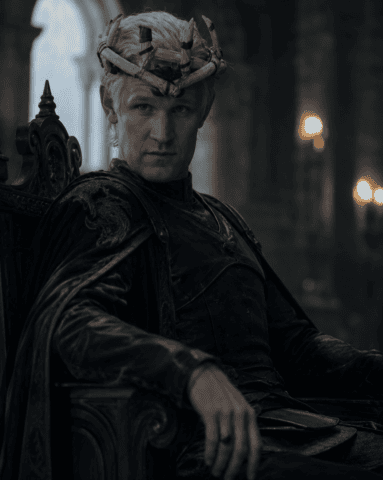
His connection to the Undying, bone-based binding, and the political structure of Paladia makes him more than a final-boss antagonist. Morrough is the mechanism through which the novel links immortality, institutional cruelty, and state violence.
Lila Bayard
Lila Bayard is a major figure in the Resistance side of Paladia’s conflict. Her importance grows because the novel’s political history is not written only by the people who suffer or resist; it is also written by the people who survive to act publicly once the war ends.
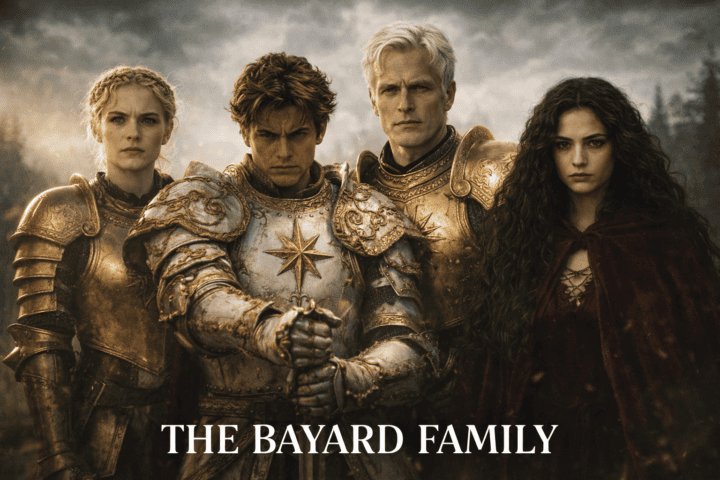
Her relationship to Luc Holdfast and later events helps establish one of the book’s enduring questions: who receives credit for victory, and whose hidden work disappears from the historical record?
Luc Holdfast
Luc Holdfast is tied to Helena’s past and the broader Resistance network. He functions as part of the novel’s map of divided loyalties, wartime obligations, and the costs borne by people who oppose the necromantic order.
His family and political connections also continue through the epilogue, where the next generation inherits a Paladia shaped by incomplete history.
Enid Rose Ferron
Enid Rose Ferron is Helena and Kaine’s daughter. She is especially important in the epilogue because her perspective turns the book’s final movement toward inheritance: not simply what children receive materially, but what they are told about the people who came before them.
Through Enid, Alchemised asks whether private truth can survive when public history has simplified, distorted, or erased it.
The Undying and High Necromancer
The Undying are not merely supernatural soldiers. They are a political category: people transformed and bound through Morrough’s necromantic power. Their existence turns the regime’s ideology into something physical, showing how authority can literalize itself in altered bodies, compulsory bonds, and controlled life force.
The High Necromancer’s power over the Undying is therefore central to both the plot and the magic system. It connects necromancy, immortality, soul manipulation, and military rule.
Other Important Characters
The larger cast includes Soren Bayard, Ilva Holdfast, Jan Crowther, Doctor Irmgard Stroud, Shiseo, Grace, Aurelia Ferron, Atreus Ferron, Erik Lancaster, Fabian Greenfinch, Matron Pace, Ivy, Purnell, Wagner, Rhea Bayard, Titus Bayard, Sebastian Bayard, Vanya Gettlich, Mandl, Davies, Penny, and Elain Boyle.
Not every supporting character needs the same amount of attention in a summary. The most useful way to read their roles is through the book’s major networks:
- The Resistance and its fractured wartime alliances.
- The Guild Assembly, Council, and other institutions that shape Paladian society.
- The Ferron and Bayard family histories.
- Medical, alchemical, and prison systems that turn expertise into leverage.
- The remnants of the old world that become evidence, memory, or propaganda after the war.
Alchemised Plot Summary
SPOILERS: The following sections discuss major plot developments, character revelations, and the ending of Alchemised.
The World Before the War
Paladia is shaped by an extended conflict commonly framed as the Necromancy War. The war does not end with restoration. It ends with a new ruling structure in which corrupt guild families, necromancers, and the Undying hold power over a traumatized population.
That setting matters because Alchemised is not built around a clean division between peace and war. The postwar world remains violent through Central prison systems, surveillance, alchemical experimentation, political purges, and the continued control of bodies and information.
Historical references involving Orion Holdfast, Cetus, Principate Apollo, and the founding myths of Paladia deepen the sense that the present conflict has roots older than the characters initially understand.
Helena’s Life and the Resistance
Helena is associated with healing, alchemy, and Resistance activity, but the opening premise prevents her from fully accessing that history. Her fractured memory is not a background detail; it creates the book’s mystery structure.
As Helena confronts fragments of the past, the reader learns that the Resistance was not a simple heroic institution untouched by compromise. It was a desperate response to a regime that had made ordinary forms of ethics difficult to sustain. The book repeatedly returns to resistance ethics: what people hide, whom they sacrifice, and how far they go when open opposition seems impossible.
Helena and Kaine
Helena and Kaine’s relationship is revealed gradually because their shared history has been obscured by memory manipulation and war. The High Reeve’s apparent role as captor is real in the present-tense structure of the novel, but it does not encompass the full truth of his relationship to Helena or his position within the regime.

The story frames their connection through danger, unequal power, concealment, and devotion shaped by extreme circumstances. That makes the fantasy-romance element intentionally uneasy. The romance is inseparable from the book’s questions about agency and control.
Morrough and the Undying
Morrough’s rule depends on more than personal power. It is sustained through the Undying, necromantic binding, and a broader political apparatus that includes guild interests and authoritarian institutions.
The novel’s later revelations explain that Morrough’s control is materially embedded in the people under him. Bone phylacteries, stolen fragments, and soul-based mechanisms give his regime a supernatural infrastructure. The result is a form of tyranny that can survive individual fear because it has been built into bodies, law, medicine, and warfare.
The Central Conflict
The central conflict becomes a race to recover truth before Morrough can permanently control or destroy it. Helena’s missing memories involve both personal history and information capable of changing the balance of power.
At the same time, Kaine’s position becomes increasingly unstable. He is bound to the regime in ways that are political, magical, and personal, while Helena’s abilities make her one of the few people able to understand the problem at its deepest level.
Major Revelations
The novel’s major revelations are tied to three connected questions:
- What did Helena choose to forget, and why?
- What is Kaine’s real position in relation to Morrough, the Resistance, and the Undying?
- How does Morrough’s necromantic control function materially?
The source material supplied for this article indicates that Helena transmuted or buried memories of Kaine’s identity in order to protect information from interrogation. It also indicates that Kaine carries a fragment linked to Morrough’s control, making his deteriorating condition part of the larger mechanism sustaining the Undying.
These revelations change the meaning of earlier scenes. What initially looks like a story of imprisonment and interrogation becomes a story about information warfare, controlled memory, coerced loyalty, and the cost of surviving inside a totalizing regime.
The Final Act
Helena’s recovery of memory enables her to act with a fuller understanding of both Kaine’s condition and Morrough’s system of control. Her healing and alchemical abilities become decisive not because they provide a simple combat solution, but because they allow her to intervene in a problem rooted in life force, identity, and binding.
The final assault on the Alchemy Tower brings the private and political conflicts together. Morrough’s fate, the status of the Undying, and Helena and Kaine’s future all depend on whether the regime’s supernatural infrastructure can be broken.
Alchemised Magic System Explained
The Alchemised magic system is a resonance-based alchemical system. It links individual aptitude, material properties, magical disciplines, and physical cost. Rather than treating magic as a vague talent, the novel connects it to bodies, matter, training, institutional power, and the risks of overreach.
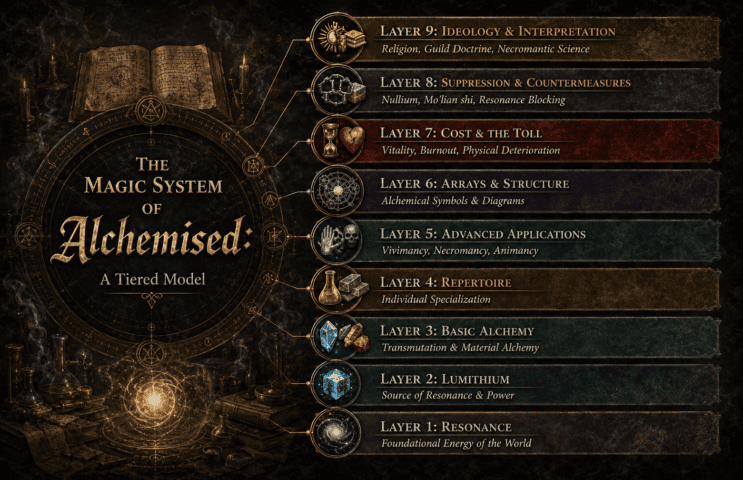
Resonance is the energy that powers alchemy in people and matter. A person’s repertoire describes the kinds of manipulation they can perform most effectively, while materials such as lumithium, nullium, and obsidian shape what magic can be conducted, blocked, stabilized, or weaponized.
| Term | Meaning and narrative function |
|---|---|
| Resonance | The natural energy underlying alchemy and magical work |
| Repertoire | The range or pattern of alchemical abilities available to an individual |
| Lumithium | A material associated with magical conduction and alchemical applications |
| Nullium | A material associated with suppression, disruption, or nullification of magical abilities |
| Obsidian | A significant material within the book’s alchemical vocabulary and object-based magic |
| Arrays | Structured alchemical designs used to direct, contain, or repeat magical effects |
| Binding | The attachment of power, beings, objects, or life force through alchemical or necromantic means |
| Transference | The movement or restoration of soul-linked or life-linked material between bodies or states |
| Healer’s Toll | The physical, psychological, or ethical cost associated with healing work and magical intervention |
| Nullification cuffs | Restrictive devices that suppress magical ability |
| Stasis chamber | A containment technology or structure associated with suspended, controlled bodily states |
The source material supports a distinction between alchemy that acts on inorganic matter and more ethically fraught forms that act on life, bodies, or souls. This distinction is central to Alchemised because the magical system mirrors the novel’s politics: the closer magic gets to bodily autonomy, the more it becomes entangled with coercion.
Related Post: Alchemised Magic System Explained: Resonance, Alchemy & All Types of Magic
How alchemy works in the story
Alchemy is not presented as a single discipline. It is a broad system that can include materials, arrays, alchemical surgery, healing, reanimation, and weaponized applications. An alchemist’s power is shaped by their resonance, repertoire, technical knowledge, tools, and access to restricted materials or institutions.
That is why spaces such as the Alchemy Institute, Alchemy Tower, West Port Laboratory, Central prison, and Resistance hospital carry narrative weight. They are not just locations. They determine who is trained, who is experimented on, who has access to knowledge, and whose body is treated as a resource.
The Four Types of Magic in Alchemised
The four broad magical disciplines associated with Alchemised are inorganic alchemy, vivimancy, necromancy, and animancy. The categories overlap in practice, but their ethical and political implications differ sharply.
| Discipline | Primary focus | Typical function | Central risk or conflict |
|---|---|---|---|
| Inorganic alchemy | Nonliving matter | Materials, objects, arrays, and alchemical construction | Access to resources and technical control |
| Vivimancy | Living bodies | Healing, biological intervention, and bodily transformation | Bodily autonomy and coercive medicine |
| Necromancy | Death, reanimation, and undead power | Reanimation, control, and immortality projects | Domination and the weaponization of life and death |
| Animancy | Soul, memory, and inner identity | Soul manipulation, memory work, and transference | Identity loss, consent, and irreversible harm |
Inorganic Alchemy
Inorganic alchemy works on nonliving material. It includes the manipulation of substances, objects, alchemical weaponry, engineered arrays, and specialized resources such as lumithium, nullium, and obsidian.
Its limitation is that technical capability does not automatically resolve living or spiritual problems. In the novel, however, material knowledge still matters enormously because objects, prisons, restraints, tools, and infrastructure are all part of how power operates.
Socially, inorganic alchemy can be professionalized and institutionalized more easily than body- or soul-based practices. That does not make it neutral. Under authoritarian conditions, even apparently technical magic can become part of surveillance, warfare, or confinement.
Vivimancy
Vivimancy concerns living bodies. Helena Marino’s role as a healer and vivimancer makes this discipline central to the book’s medical-fantasy dimension.
Vivimancy can support alchemical healing and surgery, but its closeness to the body makes it vulnerable to abuse. The source material references reproductive coercion, experimentation, physical harm, and a breeding program, all of which place bodily autonomy at the center of the story’s ethical framework.
The cost of vivimancy is not only physical exertion or magical depletion. It is also moral. A healer can be pressured to become a tool of the state, forced to act without consent, or asked to decide whose life can be saved.
Necromancy
Necromancy concerns death, reanimation, the undead, and the manipulation of life force after death. Morrough’s political system depends on necromancy because it allows him to build the Undying into a military and social apparatus.
Necrothralls, reanimation, bone phylacteries, and the pursuit of immortality are therefore not merely horror aesthetics. They reveal a worldview in which people can be reduced to useful bodies and made permanently available to power.
Necromancy’s central limitation is dependency: the system that sustains it requires anchors, bindings, and sources of control. The ending turns on the possibility that these links can be disrupted.
Animancy
Animancy concerns the soul, memory, and inner self. Helena Marino’s animancy is essential to the book’s treatment of memory manipulation because it makes forgetting an active and dangerous act rather than a passive loss.
Animancy can enable memory transmutation, soul transference, and other forms of intervention at the boundary between identity and body. Its risks are correspondingly severe. If memories can be hidden or altered, a person may survive immediate danger but lose access to their own history, relationships, and consent.
Politically, animancy destabilizes the idea that testimony alone can secure truth. A regime that controls records, bodies, or minds can reshape both the past and the story people tell about it.
Alchemised Themes Explained
Alchemised uses its dark fantasy world-building to examine the structures surrounding violence. The book’s themes are not separate from its plot: they emerge through Helena’s memory, Kaine’s position, Morrough’s regime, and the practical consequences of magic.
| Theme | How it functions in the novel |
|---|---|
| Memory and identity | Helena’s missing memories determine what she knows about herself and whom she can trust |
| Bodily autonomy | Healing, experimentation, reproduction, and magical restraint raise questions of consent |
| Trauma and survival | Survival does not erase harm or restore people to a prewar self |
| State violence | The regime turns institutions, prisons, and magical systems into tools of rule |
| Historical erasure | Public memory does not preserve every person who made survival or victory possible |
| Power and narrative | The people credited with history may not be the people who carried its greatest costs |
| Resistance ethics | Opposition to tyranny demands secrecy, compromise, and painful choices |
| Healing as resistance | Care becomes a political act when a state treats bodies as property |
Memory and identity
Memory manipulation is the novel’s clearest route into identity. Helena’s missing past is not simply a mystery for readers to solve; it affects her ability to consent, love, act, and understand her own moral history.
The idea that Helena erased or transmuted memories to protect Kaine gives this theme additional complexity. Forgetting can be both an act of agency and a form of self-loss. The novel does not treat memory as a clean archive. It treats it as vulnerable terrain shaped by war, fear, and survival.
Bodily autonomy and medical ethics
The book’s focus on vivimancy, alchemical healing, surgery, restraints, and reproductive coercion makes bodily autonomy central. Paladia’s institutions repeatedly cross the boundary between care and control.
This is where Alchemised becomes medical fantasy as well as dark romantasy. Healing is not automatically benevolent when it is performed inside prisons, laboratories, military systems, or authoritarian hierarchies. The Healer’s Toll can be understood as both a magical concept and an ethical one: every intervention has a cost, and that cost is not borne equally.
Trauma and survival
Trauma in Alchemised is not resolved by a single revelation, escape, or romantic reunion. Helena and Kaine’s survival is framed as real but incomplete. The novel emphasizes that people can endure unbearable systems without emerging untouched.
This is why the book’s emotional intensity is tied to its political structure. War trauma is not private background pain; it is produced by institutions, coercion, and prolonged exposure to violence.
State violence and institutional cruelty
Morrough’s regime relies on more than personal cruelty. It controls Paladia through prisons, militarized necromancy, guild power, surveillance, restricted knowledge, and social classification.
The Alchemy Tower, Central prison, and related institutional spaces demonstrate how bureaucratic systems can make violence ordinary. In this sense, the novel’s political horror comes from procedures as much as monsters: who is registered, contained, studied, silenced, or made useful.
Resistance and moral ambiguity
The Resistance represents opposition to Morrough’s authoritarian regime, but Alchemised does not make resistance ethically simple. Characters conceal information, make strategic sacrifices, and choose survival over public truth.
That moral ambiguity is especially important to Helena and Kaine. The novel asks whether actions taken under coercion can be understood without excusing their consequences. It does not offer an easy formula for redemption or justice.
Historical erasure and power
The ending’s treatment of Helena’s legacy gives the theme of historical revisionism its sharpest form. A person may be vital to an outcome and still be absent from the official story told afterward.
This theme connects directly to memory and identity. Helena fights to recover a personal past, while Paladia later demonstrates how public history can erase the people it does not know how—or does not wish to honor.
Related Post: Alchemised Themes Explained: Memory, Power, Trauma & Identity
Alchemised Ending Explained
SPOILER SECTION: This section discusses Morrough’s death, Kaine’s condition, Helena’s recovered memories, the Undying collapse, the epilogue, and the final line.
The short answer: Alchemised ends with Morrough’s control over Kaine and the Undying being broken, Morrough dying during the final assault, and Helena and Kaine surviving into a private life outside public Paladian history. The ending is hopeful in personal terms but bitter in political and historical terms.
Does Helena get her memories back?
Yes. Helena gets her memories back over the final part of the novel. The supplied source material indicates that her memories were not simply destroyed; she had transmuted or buried key memories herself to protect Kaine’s identity and prevent Morrough’s forces from extracting the truth through interrogation.
This makes Helena’s recovery complicated. She regains knowledge of her relationship, abilities, and wartime role, but she also confronts what the decision to erase her own memories cost her.
Why is Kaine dying?
Kaine is dying because he carries a fragment connected to Morrough’s necromantic system. The source material describes it as a portion of Morrough’s bone embedded in Kaine, functioning both as a means of control and as a drain on his life force.
This Kaine soul fragment is tied to the wider mechanism of the Undying. It is not just an injury or illness; it is evidence that Morrough’s system reaches inside the people who serve him.
What are Morrough’s bone phylacteries?
Morrough’s bone phylacteries are fragments of his bone used to bind followers into the Undying. They enable his control, draw on life force, and help sustain an army with unnatural durability.
The novel’s conflict becomes structural rather than merely personal because defeating Morrough requires breaking the network of power built through those fragments. His control is distributed through bodies, not confined to a throne room.
How does Helena save Kaine?
Helena uses vivimancy and animancy to address the fragment draining Kaine’s life and to restore what remains of his own soul. The precise mechanics are framed through alchemical healing, soul transference, and the novel’s broader concern with identity.
The important narrative point is that Helena’s decisive action is not conventional battlefield strength. Her medical and soul-based abilities let her confront the deepest mechanism of Morrough’s control.
Does Morrough die? Who kills Morrough?
Yes. Morrough dies in the final assault on the Alchemy Tower.
The available source material identifies Lila Bayard as the person who kills Morrough after Helena’s intervention weakens the larger structure supporting his power. In practical terms, Lila Bayard kills Morrough; in structural terms, Helena’s healing and Kaine’s liberation make the defeat possible.
What is the Cetus identity reveal?
The source material describes Morrough as Cetus, an ancient alchemist associated with Paladia’s deep history and connected to Orion Holdfast. This reveal expands the conflict beyond the immediate war by tying it to a much older feud, legacy, and struggle over the foundations of Paladia.
Because this detail is drawn from fan-written ending analysis rather than a quoted primary-text passage supplied here, it should be presented as a plot interpretation supported by that source material rather than as an independently verified quotation from the novel.
What happens to the Undying?
The Undying collapse as a coherent force after Morrough’s death severs the system that anchors their power. Their bone phylacteries no longer have the same source of control, which brings down the regime’s necromantic infrastructure.
The Undying collapse is therefore both military and symbolic. Paladia is freed from a force designed to make Morrough’s power appear permanent.
What happens to Helena and Kaine?
Helena and Kaine end the novel together. They survive, have a daughter Enid Rose Ferron and withdraw from public Paladian life to a remote island.
Their relationship is not presented as uncomplicated reward. Both carry the consequences of war, coercion, memory loss, and Kaine’s public identity as High Reeve. Their safety depends on remaining outside the official story of the rebuilt country.
What happens in the Alchemised epilogue?
The epilogue shifts attention to Enid Rose Ferron years after the war. Helena and Kaine have built a secluded life, while Enid eventually enters the restored world of alchemical study in Paladia alongside Pol Holdfast.
The epilogue makes the personal cost of survival visible. Paladia is rebuilding, but the people who most need distance from it cannot safely return as public participants in that rebuilding.
What does the final line of Alchemised mean?
The final line is tied to a historical caption that minimizes Helena Marino’s role in the war, describing her as a non-active member of the Order of the Eternal Flame who did not fight.
Its immediate meaning is historical erasure. Helena’s covert healing, sacrifice, recovered memories, and role in the fall of Morrough’s system are absent from the public record.
Its thematic meaning is broader: Alchemised argues that history often preserves official victories while losing the hidden labor, coerced sacrifices, and private acts of resistance that made those victories possible. Enid’s encounter with that record leaves open the possibility that the next generation may reclaim what Paladia forgot.
What is the Stone of the Heavens?
The Stone of the Heavens is a named magical object tied to the book’s broader lore. The supplied source material identifies it as relevant to the final revelations, but does not provide enough verified detail to explain its exact properties or function without risking invention.
A dedicated lore guide should distinguish clearly between text-confirmed mechanics, reader interpretation, and fan terminology before making stronger claims about the Stone.
Is Alchemised a Happy Ending?
Alchemised has a bittersweet ending. Helena and Kaine survive, remain together, raise Enid Rose, and escape Morrough’s regime; on the personal level, those outcomes are hopeful.
But the ending is not triumphant in a conventional sense. Helena’s legacy is largely erased from public history, Kaine cannot safely receive recognition for his hidden role, and both remain marked by the war they survived. Paladia begins rebuilding, yet its official narrative does not fully account for the people who helped save it.
That mixture is why “happy” is too simple a label. The ending offers love, survival, and a chosen family, but it withholds full justice, public repair, and historical recognition.
Alchemised Review: Is It Worth Reading?
Alchemised is likely to appeal most strongly to readers seeking a long, emotionally intense dark fantasy where romance is inseparable from war, captivity, memory, and political power. It is an epic fantasy standalone with dark-romantasy elements, but its governing mood is closer to political horror and medical fantasy than to light escapism.
What the book appears to do well
- It builds its dark fantasy world around systems rather than scenery alone: guilds, prisons, laboratories, necromantic armies, and alchemical institutions all shape the plot.
- Its magic system has conceptual range. Resonance, materials, healing, soul manipulation, nullification, and necromancy are connected rather than treated as disconnected fantasy terms.
- Helena’s role as healer, vivimancer, and animancer gives the story a distinctive focus on care, bodily autonomy, and the ethics of intervention.
- The Helena Kaine relationship carries genuine narrative weight because it is tied to concealed history, unequal power, and the cost of living under surveillance.
- Its thematic concerns memory and identity, state violence, trauma and survival, and historical erasure give the plot a strong analytical foundation.
What readers should consider
The book’s intensity is also its barrier. The available summaries and content-warning sources point to graphic violence, physical abuse, illness, suicidal ideation, death, reproductive coercion, captivity, and severe bodily harm. Readers looking for a low-conflict fantasy romance or a light magical adventure may find its tone overwhelming.parapith.weebly+1
The pacing is designed around delayed revelation, so readers who dislike amnesia plots, extended uncertainty, or morally fraught relationships may not enjoy the structure. Those who value detailed world-building, emotionally punishing stakes, and magic systems that interrogate institutional power may find it especially rewarding.
Alchemised vs Manacled
Alchemised and Manacled are connected through SenLinYu, but they are not the same story and should not be treated as a direct continuation. Manacled was a widely known Harry Potter fanfiction, while Alchemised is an original published novel with new characters, an original fantasy world, and a distinct magic system.today+1
The connection is best understood through thematic lineage rather than one-to-one equivalence. Both works are associated with a rebel healer, amnesia or fractured memory, oppressive wartime conditions, morally difficult romance, and the emotional pressure of authoritarian rule. Alchemised, however, relocates those concerns to Paladia and develops its own framework of alchemy, necromancy, vivimancy, and animancy.
Readers should not assume every character, plot point, or ending relationship maps directly from one work to the other.
Alchemised Adaptation
Legendary Entertainment acquired the film rights to Alchemised in a seven-figure pre-publication deal, according to contemporaneous reporting. That confirms adaptation development interest, but it does not confirm casting, a director, a production start date, a release date, or final creative choices.wikipedia+2
Until Legendary or the filmmakers release formal production information, any claims about the adaptation’s cast, schedule, format, or changes to the story should be treated as unconfirmed.
Alchemised Content Warnings
Alchemised is dark fiction with serious and potentially distressing material. Based on the available source material, relevant content warnings include:
- Physical abuse and captivity
- Graphic violence, injury, illness, and death
- Necromancy, reanimation, and altered bodies
- War trauma and authoritarian violence
- Medical coercion and alchemical experimentation
- Reproductive coercion and a forced breeding program
- Memory manipulation and psychological harm
- Suicidal ideation
- Institutional cruelty, imprisonment, and loss of bodily autonomy
Readers with specific sensitivity concerns should consult a detailed, spoiler-aware trigger guide before reading.parapith.weebly+1
Alchemised by SenLinYu Summary: Ending Explained FAQs
What is Alchemised about?
Alchemised is a standalone dark fantasy by SenLinYu about Helena Marino, an amnesiac healer and former alchemist imprisoned in postwar Paladia. As necromancers and corrupt guild families rule the country, Helena must recover lost memories and uncover the truth linking her to Kaine Ferron, the High Reeve assigned to interrogate her.wikipedia+1
What is the magic system in Alchemised?
The magic system is resonance-based and centers on alchemy, materials, arrays, binding, healing, nullification, and soul-linked practices. Major disciplines include inorganic alchemy, vivimancy, necromancy, and animancy. The system matters because magic is tied to institutions, bodily autonomy, political control, and the moral cost of using power.
Who is Helena Marino?
Helena Marino is the protagonist of Alchemised. She is a healer and former alchemist whose memories are fractured after the war. Her abilities and hidden past make her important to both the defeated Resistance and the necromantic order controlling Paladia.
Who is Kaine Ferron?
Kaine Ferron is the High Reeve, a powerful and feared figure in Paladia’s ruling system. He is assigned to uncover Helena’s missing memories, but his connection to her and his relationship to Morrough’s regime are more complicated than they initially appear.
Who is Morrough?
Morrough is the High Necromancer and the central authoritarian force in Alchemised. He rules through necromancy, the Undying, political alliances, and mechanisms that bind power to bodies. His control over Paladia is both magical and institutional.
What are the four types of magic in Alchemised?
The four major disciplines are inorganic alchemy, vivimancy, necromancy, and animancy. Inorganic alchemy affects nonliving matter; vivimancy concerns living bodies and healing; necromancy governs death and reanimation; and animancy concerns souls, memory, and identity.
What is resonance in Alchemised?
Resonance is the natural energy that powers Alchemised’s alchemical magic and exists in people and matter. It shapes what an alchemist can do, how magic interacts with materials, and how disciplines such as vivimancy or animancy can be practiced.
What is animancy?
Animancy is the magical discipline concerned with souls, memory, and inner identity. In Alchemised, it is associated with memory transmutation and soul-linked interventions, making it one of the most ethically dangerous forms of magic because it can affect a person’s sense of self.
What is vivimancy?
Vivimancy is magic concerned with living bodies. It includes alchemical healing and bodily intervention, and it is strongly associated with Helena Marino. The novel uses vivimancy to explore medical ethics, consent, reproductive coercion, and the line between care and control.
What is necromancy?
Necromancy is the discipline tied to death, reanimation, undead forces, and the manipulation of life force. Morrough uses necromancy to build the Undying and sustain his regime, turning magical control of the dead and living into a system of political domination.
What is lumithium?
Lumithium is a material used within the novel’s alchemical vocabulary and resonance-based magic system. It is associated with magical conduction and specialized alchemical applications. Its significance comes from how materials affect what magic can be performed, stabilized, restricted, or weaponized.
What is the Healer’s Toll?
The Healer’s Toll refers to the cost attached to healing and alchemical intervention. It can be understood as both a magical and ethical concept: healing is not consequence-free, especially in a world where bodies, medicine, and magical skill are controlled by powerful institutions.
What happens at the end of Alchemised?
Morrough’s control is broken, he dies during the final assault on the Alchemy Tower, and the Undying lose the source sustaining their power. Helena and Kaine survive, end up together, and raise their daughter Enid Rose in seclusion. The epilogue emphasizes that Helena’s role is largely erased from official Paladian history.
Does Alchemised have a happy ending?
Yes, but it is more accurately described as bittersweet. Helena and Kaine survive, remain together, and build a family, which gives the ending hope. However, they lose public recognition, safety in Paladia, and the possibility of a full public reckoning with what they endured.
Do Helena and Kaine end up together?
Yes. Helena and Kaine end Alchemised together and raise their daughter, Enid Rose Ferron. Their ending is private rather than public because their safety depends on remaining outside the political and historical structures of rebuilt Paladia.
Does Morrough die?
Yes. Morrough dies in the final assault on the Alchemy Tower. His death is essential because the Undying’s power depends on the system of control he anchors through necromantic binding and bone phylacteries.
Who kills Morrough?
Lila Bayard kills Morrough during the final assault, according to the supplied ending-analysis source material. Helena’s role remains crucial because her intervention helps break the deeper system controlling Kaine and the Undying before Morrough’s defeat.
Is Alchemised worth reading?
Alchemised is likely worth reading for audiences who enjoy dark fantasy, fantasy romance, intricate magical systems, wartime intrigue, morally difficult characters, and emotionally intense themes. It may not suit readers who want light romance or who prefer to avoid graphic violence, coercion, trauma, and dark institutional settings.

Hi, I’m Nisbah – a blogger with over 2 years of experience creating content and a fantasy enthusiast who loves exploring magical worlds, fantasy books, captivating stories, and unforgettable characters. I share book recommendations, reviews, fantasy insights, and story discussions and creating guides to help readers discover their next great adventure.