
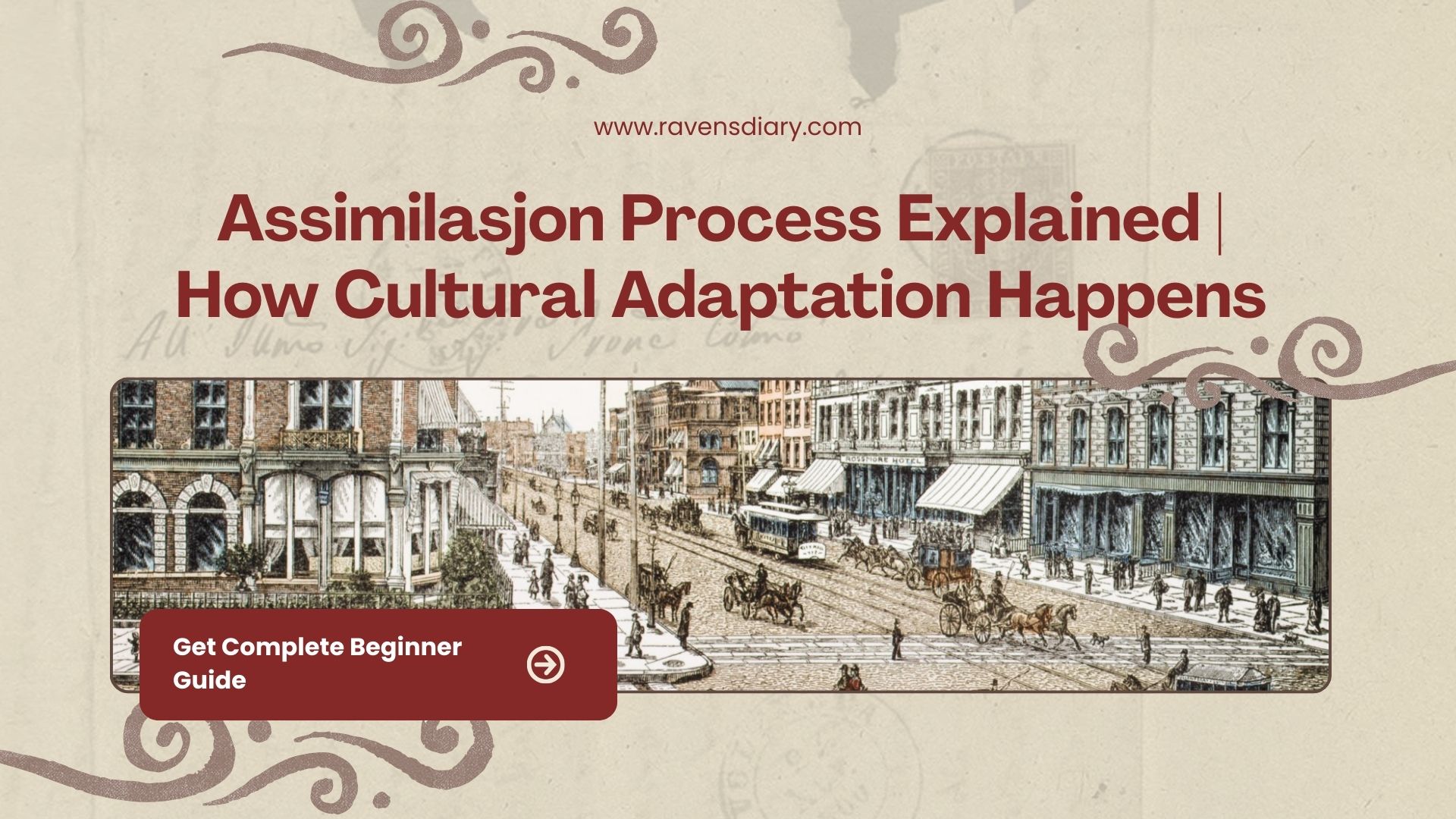
Understanding how individuals and groups adapt to new cultural environments is critical in a globalized world. The Assimilasjon process explains how people gradually adopt the language, behaviors, and values of a dominant culture. This concept appears widely in sociology, anthropology, and migration studies, particularly when studying immigrant communities and minority groups in society. By examining assimilation in society, we can better understand cultural dynamics, identity shifts, and social cohesion in modern communities.
Cultural adaptation is not always straightforward. Some people fully embrace a new culture, while others maintain parts of their heritage. The assimilation process is influenced by education systems, local customs, and social expectations. In the United States, waves of immigration illustrate how cultural assimilation and social integration occur over generations. Scholars argue that understanding assimilation in sociology helps policymakers create more inclusive communities while respecting cultural traditions.
What Is Assimilasjon? (Definition and Core Meaning)
Assimilasjon refers to the gradual process in which people adopt the behaviors, language, and social norms of a dominant culture. The assimilation meaning involves cultural adaptation where minority groups gradually change to resemble the majority. This may include language use, dress, social behaviors, and even belief systems. Second-generation immigrants often experience this shift most strongly, as they navigate family traditions alongside mainstream culture.
For example, immigrant children in American schools may speak the national language fluently and adopt local customs faster than their parents. This illustrates how cultural blending and social assimilation happen over time. Assimilation in sociology emphasizes how these changes affect both individual cultural identity and broader societal norms and values. Scholars often discuss assimilation theory to explain why some groups integrate faster than others.
The Historical Origins of Assimilasjon
The origins of assimilasjon can be traced to early sociological research on assimilation and anthropology. Sociologists observed that immigrant communities gradually adopted the dominant culture of their host societies. In the United States, the “melting pot” idea encouraged newcomers to abandon certain traditions to unify the nation. Historical assimilation policies often enforced language adoption and cultural conformity in schools and communities.
Early policies sometimes caused identity conflict for minority cultural identity. Immigrant integration research shows that forced assimilation often resulted in stress and generational tension. Despite the challenges, many immigrant groups successfully achieved social integration over time. Today, the historical context helps explain modern debates on assimilation vs integration differences in multicultural societies.
The Assimilasjon Process: How Cultural Assimilation Happens
The assimilation process generally follows several stages. First, people experience cultural contact, where they are exposed to the dominant culture. They begin observing behaviors, learning social rules, and understanding local expectations. Next is cultural adaptation, which includes language adoption, modifying personal behaviors, and adjusting to societal norms and values.
Over time, social assimilation occurs as individuals form friendships, participate in social institutions, and develop social cohesion. The final stage is identity alignment, where individuals emotionally identify with the new culture while possibly retaining elements of their original heritage. This demonstrates how assimilation and cultural identity evolve over generations.
| Stage | Key Actions | Effects |
|---|---|---|
| Cultural Contact | Exposure to customs | Awareness of norms |
| Cultural Adaptation | Learning language, habits | Behavioral change |
| Social Assimilation | Relationships, institutions | Social inclusion |
| Identity Alignment | Emotional identification | Cultural blending |
Major Types of Assimilasjon Explained
Cultural assimilation is the most visible type, involving adoption of language, dress, and customs. Structural assimilation occurs when individuals gain equal access to social institutions like schools, workplaces, and civic organizations. Social assimilation focuses on personal relationships, friendships, and marriages between cultural groups.
Identificational assimilation refers to emotional attachment to the dominant culture. People at this stage feel like part of society while still valuing their cultural traditions. Understanding these types helps explain how assimilation affects minority groups and shapes cultural change in society.
Assimilasjon in Sociology and Cultural Studies
In sociology, assimilation in society is studied to understand social mobility for immigrants and the integration of minority groups in society. Assimilation theory explores the ways newcomers gradually adopt local norms and values. Scholars in cultural sociology theory emphasize that assimilation is a two-way interaction between minority groups and the dominant culture.
Modern migration studies highlight that cross-cultural interaction leads to both cultural transition and social inclusion. Sociologists also note that social institutions such as schools and workplaces influence the speed and depth of cultural adaptation, shaping national identity formation over time.
Assimilasjon in Linguistics and Language Development
Language adoption is central to assimilation in migration. Linguistic assimilation involves adopting the phonetics, vocabulary, and grammatical patterns of the dominant culture. Over generations, second-generation immigrants often speak the national language fluently, sometimes losing fluency in their heritage language.
Language changes influence cultural identity and accelerate social integration. For instance, immigrant students who master English in school are more likely to form friendships, join clubs, and participate in civic life. This demonstrates how cultural adaptation through language underpins broader assimilation in society.
Assimilasjon in Immigration and Migration
Immigrant assimilation in the United States illustrates the assimilation process clearly. Migrants learn new languages, adopt social norms, and participate in education systems and the workforce. Successful assimilation improves social mobility for immigrants and fosters social cohesion within communities.
However, barriers such as discrimination, economic inequality, and limited access to social institutions can slow the process. Studies show that assimilation in migration is gradual, often spanning two or more generations. Immigrant integration research emphasizes policies that balance cultural preservation with cultural adaptation for better outcomes.
Assimilasjon vs. Integration vs. Multiculturalism
Assimilation vs integration differences matter in policy and society. Assimilasjon encourages minority groups to adopt dominant norms, often at the cost of heritage culture. Integration allows participation while maintaining cultural identity, and multiculturalism promotes cultural coexistence without requiring conformity.
| Concept | Definition | Effect on Cultural Identity |
|---|---|---|
| Assimilasjon | Adopting dominant culture | Often reduced |
| Integration | Participation without loss | Maintained |
| Multiculturalism | Coexistence of cultures | Celebrated |
Understanding these distinctions is critical for shaping multicultural societies and guiding immigrant assimilation effectively.
Psychological and Social Effects of Assimilasjon
The psychological effects of assimilation can be positive or negative. Positive outcomes include a sense of belonging, social inclusion, and access to opportunities. Social assimilation allows individuals to navigate society confidently and engage fully in social institutions.
Negative outcomes include identity conflict, stress, and generational tension. Second-generation immigrants often struggle to balance family cultural traditions with dominant culture expectations. Recognizing these effects is essential for designing policies that support both cultural preservation and social cohesion.
Related Post
- Serlig | How Can It Help You Beat Task Overload and Simplify Life?
- Carmela Clouth | Leadership, Creativity, and Modern Influence
Benefits and Advantages of Assimilasjon
The assimilation process promotes social integration by creating shared values and understanding between groups. Cultural adaptation allows minority communities to access education, employment, and civic participation more effectively. Economic opportunities and social mobility for immigrants often increase as a result of successful cultural assimilation.
Moreover, cross-cultural interaction fosters innovation and creativity. Blending traditions can produce new cultural expressions, strengthening cultural pluralism and enhancing community resilience. When done thoughtfully, assimilation in society can be a tool for unity without erasing diversity.
Criticism and Controversies Around Assimilasjon
Critics argue that assimilation in migration may erode minority cultural identity and reduce cultural diversity in society. Historical assimilation policies sometimes forced immigrants to abandon cultural traditions, resulting in tension and generational stress.
Power dynamics also play a role. The dominant culture often sets the expectations for adaptation, leading to unequal influence. Scholars in cultural sociology theory emphasize that policies must balance cultural coexistence with cultural adaptation to prevent marginalization.
Inline Citations to Studies and Reports
Inline citations give readers and Google confidence that the content is evidence-based. For example, when discussing the assimilation process, you could reference peer-reviewed research or government reports:
“According to a 2020 study by the Migration Policy Institute, nearly 70% of first-generation immigrants in the U.S. achieve functional English proficiency within ten years of arrival.”
“Research in the American Sociological Review highlights that social assimilation correlates strongly with participation in local social institutions such as schools and community organizations.”
These citations show expertise and allow readers to verify your claims.
Expert Quotes in Relevant Sections
Including quotes from recognized scholars or practitioners adds authority and trustworthiness. Examples:
Milton Gordon, a pioneer in assimilation theory, noted, “Assimilation is not just about language or behavior; it is the adoption of social norms and emotional identification with the host society.”
Dr. Alejandro Portes, a leading researcher in immigrant assimilation, explains, “Second-generation immigrants often experience tension between cultural traditions at home and societal expectations outside.”
Assimilasjon in Modern Multicultural Societies
In multicultural societies, complete assimilation is rare. Global cities like New York or Los Angeles show how cultural blending occurs alongside cultural preservation. Immigrants maintain heritage languages, foods, and traditions while adapting to societal norms and values.
Globalization accelerates this process, allowing people to stay connected to their home culture digitally while engaging in local society. This results in hybrid identities, demonstrating how cultural adaptation is dynamic and multi-layered. Assimilation in multicultural societies becomes a flexible process rather than a strict requirement.
The Future of Assimilasjon in a Globalized World
The future of assimilasjon will likely involve a balance between adaptation and cultural preservation. Digital connectivity allows immigrants to maintain strong ties with their heritage while participating in social institutions of the host society.
Modern multicultural policy frameworks encourage inclusion without erasing identity. People are developing cultural pluralism, creating hybrid identities shaped by both heritage and mainstream influences. Understanding the assimilation process remains critical for policymakers, educators, and communities navigating an increasingly interconnected world.
Conclusion
The assimilasjon process explains how minority groups in society adapt to a dominant culture over time. It affects language, behavior, social participation, and cultural identity. While assimilation can promote social integration, it also risks identity conflict and cultural loss. By studying assimilation in sociology and applying lessons from migration policy studies, societies can create inclusive environments that respect both adaptation and cultural preservation.
Assimilation is not a one-way street. It is a conversation between cultures, a delicate balance between unity and diversity. Understanding it helps us navigate modern multicultural societies, support immigrant assimilation, and foster social cohesion in a world shaped by globalization.
FAQs About Assimilasjon
1. What is assimilasjon?
Assimilasjon is the process where individuals or groups adopt the language, behaviors, and values of a dominant culture.
2. What is assimilation in sociology?
In sociology, it describes how minority groups gradually integrate into society while adapting to social norms and institutions.
3. Assimilation vs integration – what’s the difference?
Assimilation requires cultural conformity, while integration allows maintaining original cultural identity alongside participation in society.
4. Why is assimilasjon important?
It helps immigrant communities participate fully in society, promotes social cohesion, and eases communication and shared values.
5. What are the types of assimilasjon?
Major types include cultural assimilation, social assimilation, structural assimilation, and identificational assimilation.
6. How does assimilasjon affect immigrants?
It can improve social mobility and belonging but may also cause identity tension or conflict across generations.
7. Is assimilasjon the same in all countries?
No. Cultural, social, and policy factors differ, so assimilation varies between nations and multicultural societies.
8. Can someone assimilate and keep their cultural identity?
Yes. Many people adapt to a dominant culture while preserving heritage language, traditions, and beliefs.
9. What is an example of cultural assimilation?
Immigrant children in U.S. schools speaking English fluently and adopting local customs while keeping family traditions.
10. Does assimilasjon happen quickly?
Rarely. It usually takes multiple generations and depends on exposure to social institutions, community support, and local norms.
Stay Connected and Share Your Feedback
Our site is dedicated to helping individuals and organizations unlock real potential through capability intelligence, adaptive evaluation models, and learning transformation, with fantasy guides books, magical recipes . We share insights, research-backed strategies, and practical guidance to support human-centered growth and future-ready workforce alignment at Ravens Diary.
If you find our content valuable, we’d love your feedback, and you can get notified of new posts by bookmarking this page. Whether you’re a professional, educator, or leader, our goal is to provide trusted resources that empower you to develop talent, make smarter decisions, and achieve measurable results.