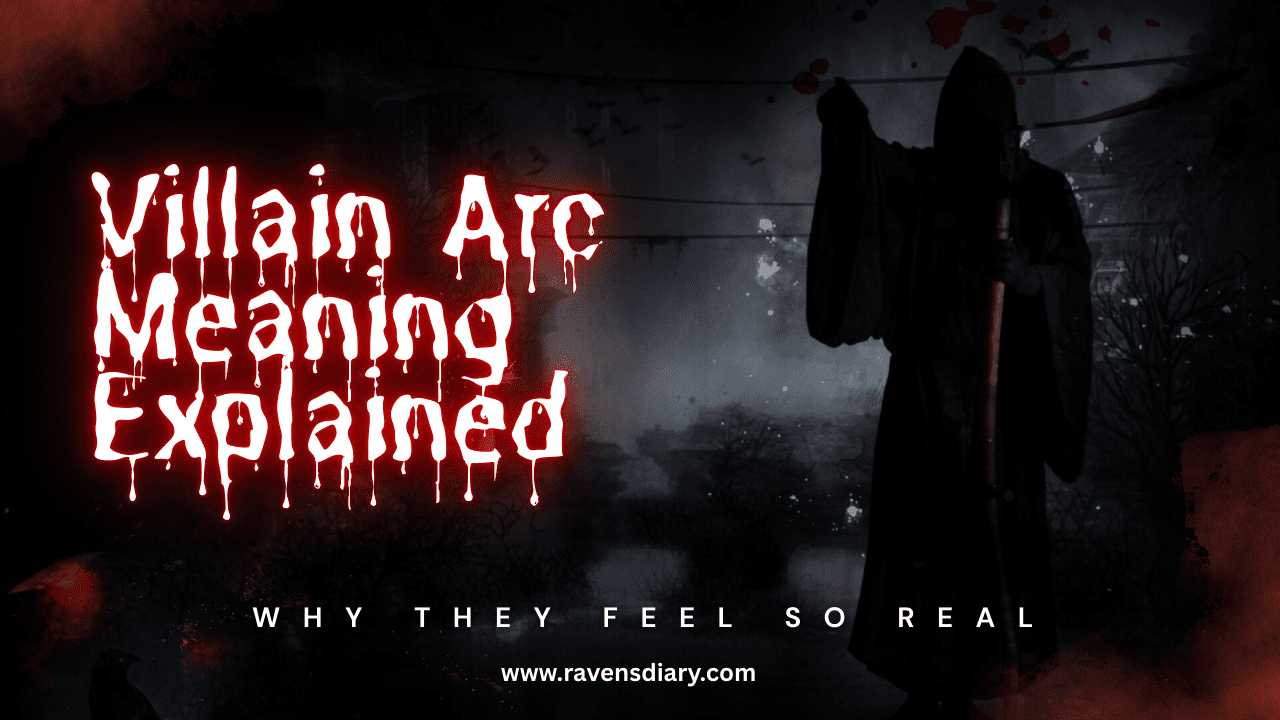
You know that uncomfortable feeling. You’re watching a villain on screen. Their logic starts making sense. You catch yourself nodding. Then you snap out of it — slightly unsettled. That moment right there? That’s a villain arc doing exactly what it was designed to do. Understanding villain arc meaning goes far beyond knowing who the bad guy is. It means understanding the journey, the psychology, and the structural craft that turns a character into something readers can’t stop thinking about. This guide covers everything from definition to psychology to a workbook you can use today.
What Is a Villain Arc? A Complete Definition
A villain arc is the narrative journey of a character who moves from a neutral or even sympathetic starting point toward full moral darkness. It is not simply “bad person does bad things.” The transformation itself the why behind the descent is what gives it meaning and emotional power. Think of it as the shadow-side of a hero arc. Where heroes grow toward purpose and light, villains spiral downward through a sequence of choices, losses, and justifications that feel tragically inevitable.
The villain arc meaning becomes clear when you separate it from a regular character arc. A standard arc tracks change. A villain arc tracks moral collapse. It maps the erosion of values under sustained pressure — and it does so with enough psychological logic that readers follow every single step. The best villain arcs don’t feel evil. They feel human. That’s what makes them so deeply unsettling and so impossible to forget.
How a Villain Arc Differs From a Regular Character Arc
A regular character arc can go in any direction — growth, stagnation, or decline. A villain character development arc specifically tracks downward moral movement. It is a negative character arc by design. The character doesn’t stumble accidentally into evil. They choose it — one small, justified step at a time. That distinction is everything.
Antagonist vs. Villain: Why the Distinction Matters
Many writers use antagonist and villain as if they mean the same thing. They don’t. An antagonist is simply any force that opposes the protagonist. That force could be a person, a system, nature, or even the protagonist’s own mind. An antagonist doesn’t need a character arc. It just needs to create narrative conflict. A villain, however, carries moral weight. A villain transforms. A villain has a reason — and that reason changes them irrevocably.
"People do not ordinarily engage in harmful conduct until they have justified to themselves the rightness of their actions."Harvey Dent is the clearest real-world illustration of this divide. Before his fall, he is Gotham’s most principled legal mind — an antagonist to no one. But trauma weaponizes his idealism. His character descent into villainy is driven by a specific, devastating loss. That transformation is what earns him the title of villain. Without it, he’s just a bitter man. With it, he becomes a mirror for every person who ever let pain rewrite their values.
What Makes Someone an Antagonist and Nothing More
A static antagonist blocks the hero. That’s the job. No internal change. No moral shift. No escalating psychology. Think of a natural disaster in a survival thriller or a faceless corporation in a legal drama. These forces create storytelling conflict structure without needing their own arc.
When a Character Crosses the Line Into True Villainy
A character becomes a true villain at the moment they make a conscious choice that prioritizes their own distorted worldview over the humanity of others — and feel justified doing it. That justification is the key. It signals moral ambiguity collapsing into full ethical transformation in the wrong direction.
| Feature | Antagonist | Villain |
|---|---|---|
| Opposes protagonist | Yes | Yes |
| Undergoes transformation | Not required | Essential |
| Has personal motivation | Optional | Always |
| Carries moral weight | Rarely | Always |
| Drives narrative emotionally | Sometimes | Consistently |
The Psychology Behind Compelling Villain Arcs
The best villain arcs don’t come from randomness. They come from psychological truth. Albert Bandura’s theory of moral disengagement explains exactly how real people not just fictional characters dehumanize others to justify harmful behavior. Writers who understand this theory build villains who feel frighteningly real. Walter White doesn’t wake up one morning and decide to become a drug lord. His trauma driven behavior unfolds gradually. Each rationalization lowers the next moral threshold. That’s Bandura’s theory playing out across five television seasons.
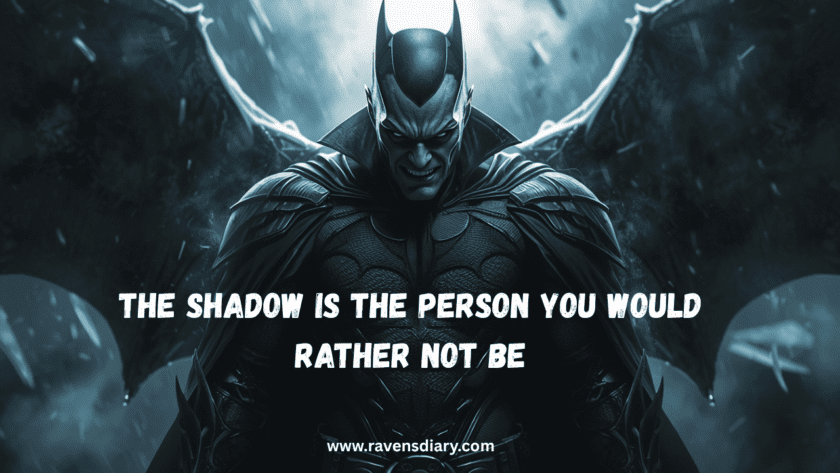
Carl Jung’s concept of the shadow archetype adds another layer. Every person carries a shadow the repressed, darker aspects of the self that civilization demands we suppress. A compelling villain character psychology arc is essentially the shadow taking over completely. Magneto’s arc is a perfect example. His shadow forged in the fires of historical atrocity eventually consumes every other part of him. Readers understand him because they recognize the shadow. They carry one too. That recognition creates the unsettling empathy that makes character psychology in fiction so powerful.
Why Villain Arc Meaning Goes Deeper Than “Evil for Evil’s Sake”
A villain without psychological grounding is a plot device. A villain with trauma driven behavior rooted in real human experience is a cultural landmark. The difference between a forgettable antagonist and a character like Anakin Skywalker is entirely psychological depth. Fear of loss. Manipulation of grief. That’s human. That’s why it works.
The Dark Mirror Technique and Its Effect on Readers
Place your villain’s backstory beside your hero’s. Ask: what actually separates them? Often, it’s one decision made under identical pressure. This is the dark mirror technique — and it drives emotional conflict straight into the reader’s chest. Because if circumstances were different, the hero could have fallen too.
Key Psychological Drivers That Fuel Every Villain Arc
Revenge motivation distorts justice into obsession. Moral ambiguity keeps readers from choosing sides too quickly. Fear of loss, wounded pride, and betrayed idealism are the three most emotionally resonant drivers in antagonist journey in fiction. Use at least one of them. Use all three if your story can hold the weight.
Types of Villain Arcs: Every Pattern Explained
Not every villain falls the same way. The type of arc you choose shapes the emotional experience of your entire story. A corruption arc descends gradually and logically. Walter White is the textbook example. Each choice in Breaking Bad seems almost reasonable in isolation. Together, they build an irreversible character moral decline that feels horrifyingly believable. This arc works best in slow-burn dramas where the reader has time to follow every step of the unraveling.
A disillusionment arc hits differently. The villain once believed in something justice, love, order, a better world. Then that belief was destroyed. Harvey Dent believed in Gotham’s justice system with his whole being. When it failed him at the worst possible moment, his entire antagonist character arc collapsed inward. He didn’t become evil randomly. He became a weapon forged from a shattered ideal. This arc suits stories about betrayal, institutional failure, and the danger of absolute belief.
The Corruption Arc: When Good People Make One Small Wrong Turn
The corruption arc is the most psychologically realistic villain transformation in stories. It starts with a single, almost invisible moral compromise. Then another. Then another. The reader barely notices until the character is unrecognizable. Walter White saying “I am the danger” is the corruption arc fully realized — and it took four seasons to get there honestly.
The Tragic Arc: Fate, Manipulation, and No Way Out
In a tragic villain arc, external forces do the damage. Manipulation, circumstance, and misunderstanding combine to push a genuinely good person toward destruction. Anakin Skywalker is the tragic arc in its purest form. His fear of loss was the wound. Emperor Palpatine was the infection. The result was Darth Vader — a tragedy, not a monster.
| Arc Type | Core Driver | Key Example | Best Used For |
|---|---|---|---|
| Corruption arc | Gradual moral compromise | Walter White | Slow-burn drama |
| Disillusionment arc | Betrayed belief | Harvey Dent | Betrayal/institutional stories |
| Tragic arc | Fate and manipulation | Anakin Skywalker | Emotional tragedy |
| Rise arc | Power over humanity | Thanos | Epic/genre fiction |
| Hybrid arc | Multiple forces | Light Yagami | Complex narratives |
Villain Archetypes and Their Signature Arcs
Pattern recognition is a writer’s most underused tool. Every memorable villain fits or deliberately subverts a recognizable archetype. The Mastermind operates on intelligence alone. Their arc always peaks in hubris because the one thing they never account for is the human element they’ve stopped respecting. Dr. Jekyll believed intellect could control everything. It couldn’t. The Tragic Monster is born from pain or misunderstanding. Gollum was corrupted slowly, over centuries, by something that promised him everything and gave him nothing. Readers pity him before they fear him and that emotional sequence is what makes him immortal.
"The villain must believe he is the hero of his own story."The Corrupted Idealist is arguably the most chilling archetype of all. They start with a mission that sounds almost noble. They end justifying atrocity with airtight logic. Thanos genuinely believes he is saving the universe. That sincerity that complete absence of self-awareness about his own monstrousness is what makes him unforgettable. The anti-villain arc belongs to characters like Magneto and Deadpool — wrong methods, but a moral compass that still exists, still flickers. They are the most direct protagonist foil because their logic frequently exposes what the hero refuses to examine in themselves.
The Fallen Hero: The Most Personal Archetype of All
Someone loved this character. A mentor. A family. A city. History with the hero makes every clash feel personal rather than plot-mechanical. Anakin Skywalker as Darth Vader carries the weight of every relationship Obi-Wan built with him. That’s why the final duel hits so hard. It’s not a fight. It’s a funeral.
The 7 Stages of a Villain Arc: Full Story Structure Breakdown
This is where villain arc meaning becomes genuinely structural rather than abstract. Every great villain arc follows a recognizable rhythm of seven stages and understanding them gives you a blueprint that works across every genre and medium.
Stage 1: The Foundation of Flaw
Every compelling character corruption arc begins with something real and human. Michael Corleone begins as a man who refuses the family business. His flaw is not cruelty — it’s love. Love becomes the pressure point that everything else exploits. Plant your villain’s flaw in something readers will recognize and respect.
Stage 2: Trigger Event
A catastrophic inciting incident shatters the character’s equilibrium. A loss. A humiliation. A betrayal that rewrites everything they believed was stable.
Stage 3: The First Moral Compromise
This stage is the most important in the entire arc and the most commonly rushed. The first compromise must feel almost reasonable. Readers should understand the choice even if they don’t approve of it. Walter White cooks methamphetamine to pay for cancer treatment and protect his family. Monstrous in isolation. Comprehensible in full context. That comprehension is the trap and it’s exactly where the narrative tension building begins.
Stage 4: Escalation
Each choice makes the next one easier. The ethical threshold drops with every decision.
Stage 5: The Point of No Return
The point of no return is the structural hinge of every villain arc. Before it, redemption is theoretically possible. After it, the character’s identity has shifted permanently. This moment must cost the character something real their last meaningful relationship, their self-image, their stated values. Without genuine cost, the point of no return is just a dramatic scene. With it, it becomes the defining moment of the entire story.
Stage 6 and 7: Consequences and the Shape of the Ending
A villain arc doesn’t always end in defeat. Sometimes it ends in hollow victory which functions as a more devastating kind of loss. Tony Soprano never faces dramatic punishment. He simply continues isolated, paranoid, unable to enjoy the empire he built. That ongoing consequence is its own form of ruin. Narrative consequences must feel proportional, honest, and inevitable in retrospect.
Classic and Modern Villain Arc Examples
Real examples teach faster than theory. Walter White remains the gold standard of the corruption arc in American television. His transformation across Breaking Bad is structurally precise every moral compromise is earned, every escalation is logical, every loss is deserved. By the final season, the man who said “I did it for my family” is admitting to himself, alone, at last: “I did it for me.” That single line is the entire arc compressed into eight words. It is character driven storytelling at its absolute finest.
Magneto’s arc operates across decades of comic and film adaptations and it holds because the foundation is historically grounded. His trauma driven behavior is not metaphorical. It is rooted in specific, documented human atrocity. His ideology is not madness. It is a wound that never received proper treatment. Cersei Lannister delivers a different kind of arc one where survival instinct, unchecked by love or loyalty, gradually dismantles every relationship and value she once held. Her arc is the falling villain arc shaped by circumstance as much as choice. And Zuko from Avatar: The Last Airbender stands as the most complete redemption arc in modern animated storytelling three full seasons of earned, painful, genuinely costly change.
Related Post
- Guia Silent Hill Geekzilla: What It Is & Why Every Fan Needs It
- 15 Powerful Types of Magic in Fantasy & Sci-Fi | A Complete Guide
- 14 Most Popular Fantasy Races & Creatures from Myths and Stories
Walter White as a Case Study in Narrative Escalation
The genius of Walter White’s arc is its pacing. Narrative escalation happens in invisible increments. Each episode adds one more brick to the wall between the man he was and the man he’s becoming. By the time viewers notice the wall is complete, they’ve been helping build it alongside him — and that complicity is the real storytelling achievement.
Cross-Media Examples That Expand Topical Authority
Spec Ops: The Line delivers one of gaming’s most devastating villain arcs a protagonist who becomes the monster while convinced he’s saving people. Dr. Jekyll and Mr. Hyde gave literature its defining character transformation arc over a century ago. These cross-media examples prove that antagonist journey in fiction operates by the same structural rules regardless of the format.
Villain Arc vs. Antihero Arc vs. Redemption Arc
These three patterns blur constantly and the confusion costs writers real narrative clarity. A villain arc ends in moral collapse, destruction, or a victory that functions as its own punishment. A redemption arc ends in genuine, earned change requiring real sacrifice and real accountability, not a last-minute heroic gesture. An antihero arc never fully resolves. The character remains deliberately, frustratingly suspended between both possibilities. Tony Soprano dances in antihero territory for six complete seasons and never crosses fully into either camp. That permanent unresolved tension is the entire artistic point.
Zuko completes a true redemption arc because his change costs him everything his home, his father’s approval, his identity as a prince. Jaime Lannister begins a redemption arc but its completion is debated fiercely among readers which is itself evidence of how well-constructed the moral complexity was. Deadpool operates firmly in antihero territory: genuine moral awareness, questionable methods, and a self-awareness about the contradiction that functions as both his character flaw and his most endearing quality. Understanding which of these three arcs your character is on changes every structural and emotional decision that follows.
What a True Villain Arc Ending Actually Looks Like
A villain arc ending delivers narrative consequences proportional to the character’s choices. It does not require death or defeat but it requires honest reckoning. The character must face, in some form, the cost of who they chose to become. Without that reckoning, the arc feels incomplete regardless of how well-constructed the preceding stages were.
| Arc Type | Direction | Typical Ending | Key Example |
|---|---|---|---|
| Villain arc | Moral collapse | Ruin or hollow victory | Walter White |
| Redemption arc | Moral recovery | Earned forgiveness or sacrifice | Zuko |
| Antihero arc | Moral suspension | Unresolved — deliberately | Tony Soprano |
Why Readers Emotionally Connect With Villain Arcs
Readers don’t root for evil. They root for understood evil. When a reader follows a villain’s internal logic and finds it coherent even while finding it repellent — something deeply uncomfortable shifts in them. They begin asking the question every great villain arc is designed to provoke: could I make that same choice under enough pressure? That self-interrogation is the real hook. Reader psychology responds to moral ambiguity more powerfully than to any clean moral binary. A character who is simply evil creates distance. A character whose evil is comprehensible creates dread because comprehension implies proximity.
This is why villain arc meaning in storytelling extends far beyond plot mechanics. The emotional conflict a villain arc provokes in readers drives fan theories, heated debates, compulsive rewatches, and decades of cultural conversation. Hannibal Lecter has been analyzed, adapted, and reimagined for over forty years. Not because he’s frightening. Because he’s brilliant and charming and impossible to fully condemn — and that impossibility is what keeps readers returning. Emotional stakes in storytelling are always highest when the reader is implicated in the character’s journey. Villain arcs implicate readers more deeply than any other arc type does.
The Uncomfortable Truth About Reader Empathy
Character psychology in fiction works by triggering the same neural processes as real-life empathy. When readers understand a villain’s reasoning, their brains engage the same empathy circuits they use for real people. That’s not a flaw in the reader. It’s a feature of great storytelling. It’s also a responsibility writers must handle with care.
How to Write a Villain Arc: A Practical Step-by-Step Guide
Start with motivation before anything else. Not what your villain does but why, at the deepest possible level. Dig past the surface answer. Dig past the second answer. Keep going until the answer becomes embarrassingly human. Fear of irrelevance. Love curdled into control. Justice that ran out of patience. That raw, recognizable humanness is the entire foundation of writing compelling villains. Without it, everything built on top feels decorative rather than structural. With it, every scene carries emotional weight the reader can’t shake.
Then resist the temptation to make the descent frictionless. Give your villain internal resistance early. A moment of genuine doubt. A near-redemption squandered by one bad choice. A relationship they almost let save them. Character driven storytelling demands that the villain feel the pull of better choices even as they refuse them. That refusal made consciously, with full awareness of what it costs is what transforms a narrative descent into a tragedy. And tragedy is what readers carry with them long after the story ends.
Step 1: Dig Until the Motivation Becomes Embarrassingly Human
Antagonist motivation must connect to something universal. Revenge. The fear of being forgotten. Love expressed as possession. Once you find the embarrassingly human core, you have the character. Everything else the powers, the plans, the confrontations is just expression of that core taking different shapes across the story.
Step 2: Seed Ethical Lapses Early and Invisibly
Fiction writing structure demands foreshadowing that reads as invisible on first pass and inevitable on second. Drop one small ethical lapse in your first act. A rationalization. A lie told to someone who trusted them. A cruelty brushed aside as necessary. Plant it quietly. Let it grow. When the point of no return arrives, readers should look back and say: of course it went there. Of course.
Step 3: Link Every Villain Move to the Hero’s Journey
Every significant villain action should force the protagonist to change, adapt, or double down. This is plot driven character arcs working at full efficiency. The villain isn’t just an obstacle. They’re a pressure system that continuously reshapes the hero’s path. When the two arcs are tightly interlocked this way, the story feels inevitable rather than constructed.
Common Writing Mistakes That Kill Villain Arcs
Rushing the descent is the most common error. Walter White’s corruption took five full seasons. Compressing that into three episodes would have robbed every beat of its emotional payoff. The second mistake is over-explaining motivation through dialogue. Reveal the psychology through action, behavior, and consequence. Show the villain’s emotional conflict don’t narrate it. Readers who figure out the psychology themselves invest far more deeply than readers who are simply told it.
H2 11 — The Role of Villain Arcs in Professional Storytelling
Publishers, film producers, and script executives look for complex antagonists as one of the clearest markers of genuine narrative maturity in a writer’s work. A dynamic antagonist with a fully realized arc demonstrates that the writer understands story arc development at a structural level that most don’t reach. It signals that the conflict will have depth. That the themes will have weight. That the story won’t collapse the moment the villain steps offstage. This is why the most commercially successful and critically celebrated properties consistently feature villain arcs that force genuine reflection.
Robert McKee in Story argues that the antagonist must be as fully realized as the protagonist because the strength of the villain directly determines the ceiling of the hero’s achievement. Blake Snyder’s Save the Cat framework emphasizes that the “villain’s plan must make sense on its own terms.” Joseph Campbell’s hero’s journey framework only functions at full power when the opposing force carries genuine weight. Narrative storytelling strategies built around shallow villains inevitably produce shallow stories regardless of how compelling the hero is. The most enduring properties in American popular culture Hannibal Lecter, Thanos, Gollum — share one architectural trait: their arcs force the audience to examine something uncomfortable about human nature itself.
How Villain Arcs Drive Adaptation and Cultural Longevity
Storytelling techniques that generate long-term cultural conversation always center on moral complexity. Gollum has been analyzed by literary scholars, psychologists, and addiction counselors. Magneto has been cited in academic papers about trauma and ideology. These aren’t accidents of popularity. They are direct outcomes of narrative character development built on authentic psychological foundations that resonate across generations and cultures.
Build Your Own Villain Arc: The Workbook Template
Mastering villain arc meaning starts with five questions answered honestly before you write a single scene. First: what did your character once love or believe in completely? Second: what specific event destroyed or corrupted that love or belief? Third: what was their first moral compromise the small one they barely noticed? Fourth: what is their point of no return the action that makes their identity shift permanent? Fifth: what do they ultimately sacrifice to become what they are? These five answers are your arc’s skeleton. Every plot mechanic, every confrontation, every speech hangs off this framework. Build it solid and the story follows naturally.
The stage map below gives you a fill-in-the-blank structure you can apply across any genre — thriller, fantasy, literary fiction, screenwriting, or game narrative storytelling strategies. Copy it. Print it. Fill it in before you outline a single chapter. Writers who plan the villain arc before the hero arc consistently produce more structurally unified stories — because the story conflict dynamics between hero and villain become architecturally coherent from the very first draft.
The 5 Questions You Must Answer Before Writing Scene One
These questions work across every genre and medium. They produce the psychological skeleton that makes character transformation arc feel inevitable rather than imposed. Answer them in full. Don’t accept surface answers. Keep asking “why” until the answer becomes uncomfortable because uncomfortable answers produce honest, memorable villains.
Your Villain Arc Stage Map
| Stage | What Happens | Your Character’s Version |
|---|---|---|
| 1 — Foundation of flaw | Core weakness exists before story begins | |
| 2 — Trigger event | Inciting incident shatters equilibrium | |
| 3 — First compromise | Small, justified moral lapse | |
| 4 — Escalation | Each choice lowers the next threshold | |
| 5 — Point of no return | Irreversible action taken | |
| 6 — Identity shift | Character fully inhabits villain role | |
| 7 — Consequences | Ruin, victory, or hollow dominance |
How to Use This Template Across Any Genre
In a thriller, the trigger event might be professional betrayal. In fantasy, it might be a curse or a prophecy weaponized by the wrong person. In literary fiction, it might be a single conversation that reframes everything the character believed about themselves. The story arc development framework doesn’t change. Only the surface details do. The psychological architecture underneath is universal because human moral collapse follows recognizable patterns regardless of the world the story is set in.
Conclusion
The real villain arc meaning has nothing to do with evil. It has everything to do with truth. The best villain arcs are mirrors reflecting back what we fear about ourselves, about human nature, about the fragility of the values we assume are permanent. They show us that cruelty rarely announces itself. It arrives quietly, logically, one small justified step at a time. When you ground your antagonist in honest psychology, structure their fall with intention, and give their motivation a root that readers recognize in their own lives — you create more than a compelling character. You create a question the reader carries with them. And questions, far more than answers, are what keep stories alive.
FAQs
1. What does villain arc mean?
A villain arc is a character’s narrative journey from a good or neutral starting point into moral darkness through believable, escalating choices.
2. What is the villain arc in real life?
In real life, a villain arc describes someone’s gradual moral decline driven by trauma, betrayal, obsession, or unchecked ambition think corrupt politicians or fallen public figures.
3. What is the villain arc era?
The villain arc era is a popular internet phrase describing a personal phase where someone stops people-pleasing and starts boldly prioritizing themselves without apology.
4. What causes a villain arc?
A villain arc is typically triggered by deep trauma, betrayal, loss, or a shattered belief system that pushes a character past their moral breaking point.
5. How to use villain arc?
Use a villain arc by giving your antagonist a believable motivation, a clear trigger event, and a step-by-step moral descent that readers can follow and understand.
6. Who is the No. 1 villain?
While subjective, Hannibal Lecter is widely considered the greatest villain in storytelling history ranked No. 1 by the American Film Institute in 2003.
7. What is the psychology behind a villain arc?
Villain arcs are rooted in Bandura’s moral disengagement theory and Jung’s shadow archetype both explain how humans justify harmful behavior through trauma, fear, and distorted logic.
8. What is a female villain called?
A female villain is commonly called a villainess notable examples include Cersei Lannister, Maleficent, and Amy Dunne from Gone Girl.
9. Who has the best villain arc?
Walter White from Breaking Bad is widely regarded as having the greatest villain arc ever written a slow, psychologically precise five-season moral collapse that felt completely inevitable.
Stay Connected and Share Your Feedback
Our site is dedicated to helping individuals and organizations unlock real potential through capability intelligence, adaptive evaluation models, and learning transformation, with fantasy guides books, magical recipes . We share insights, research-backed strategies, and practical guidance to support human-centered growth and future-ready workforce alignment at Ravens Diary.
If you find our content valuable, we’d love your feedback, and you can get notified of new posts by bookmarking this page. Whether you’re a professional, educator, or leader, our goal is to provide trusted resources that empower you to develop talent, make smarter decisions, and achieve measurable results.