
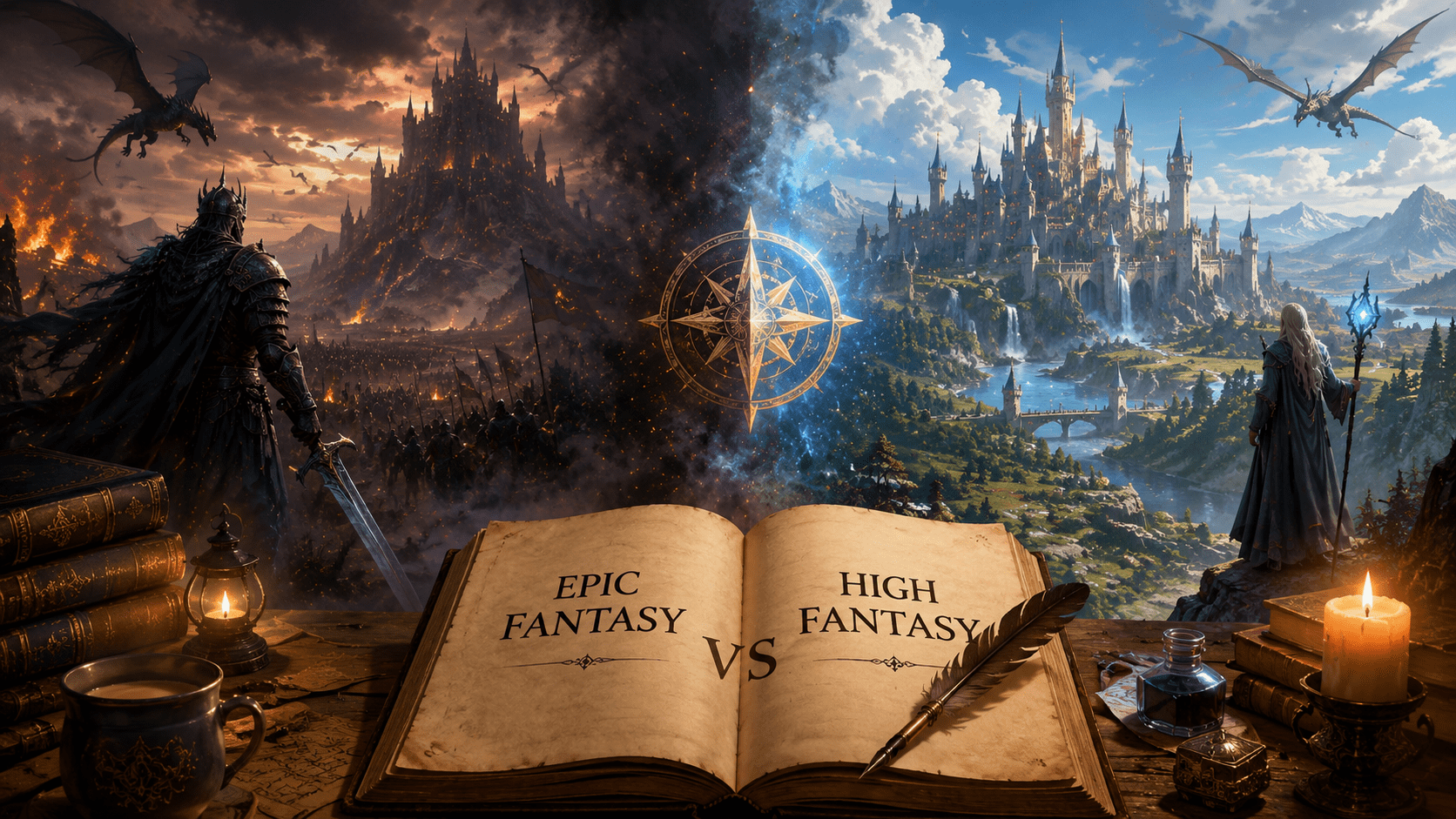
Most people use “epic fantasy” and “high fantasy” as if they mean the same thing. Publishers blur the line. Bookstore categories blur it too. Even some authors do. So that’s why here is the difference between Epic Fantasy vs High Fantasy.
They are not the same thing. And once you understand the actual difference, you’ll read both genres with sharper eyes and find new books far more efficiently than “I liked Tolkien, what’s similar?” ever gets you.
I’ve been navigating this distinction as a reader for years. The confusion cost me more than a few disappointing picks before I sorted it out. This guide is the explanation I wish someone had given me earlier.
How a High Fantasy World Actually Gets Built
Understanding the difference between epic and high fantasy is one thing. Understanding why some secondary worlds feel alive and others feel like cardboard sets is another and it changes how you evaluate a book before you buy it.
A convincing secondary world usually rests on three things.
A magic system with real limits. The best world-builders treat magic like a design problem, not a special effect. Brandon Sanderson, whose Mistborn books run on one of fantasy’s most disciplined systems, put it simply on his site: “limitations are more important than abilities.” That’s the whole split between “hard” magic (clear rules, used to solve plot problems Mistborn, the Stormlight Archive) and “soft” magic (mysterious, rarely a fix-it button Gandalf in The Lord of the Rings is the classic example). Neither is better. But knowing which one a book uses tells you a lot about what kind of read you’re in for.
A history the characters actually believe in. Worlds feel real when the people in them reference the past like it happened wars nobody living remembers, ruins nobody can fully explain, gods whose worship has drifted over centuries. This is why The Wheel of Time‘s Age of Legends or The Stormlight Archive‘s Knights Radiant lore land so hard: the myth predates the plot.
Peoples with their own logic. Elves, dwarves, and invented races only work when the author decides who they are beyond “human but pointy-eared.” What do they want? What have they lost? The Witcher‘s elves carry real historical grievance. That’s the difference between decoration and world-building.
When you’re sizing up a high fantasy book, these three questions what are the magic’s limits, what’s the weight of its history, who are its peoples are a faster filter than “does it have a map.”
What Is High Fantasy? The “Where” Question
Here’s the cleanest way to think about high fantasy: it answers the question where. Specifically does this story take place in a world entirely invented, completely separate from our own?
High fantasy is defined by its setting. The story exists in a secondary world a term coined by Tolkien himself with its own geography, history, languages, magic systems, and rules of physics. You cannot arrive there by plane. It doesn’t appear on any atlas. Middle-earth is the prototype. Westeros is another. The world of Mistborn. The Continent in The Witcher.
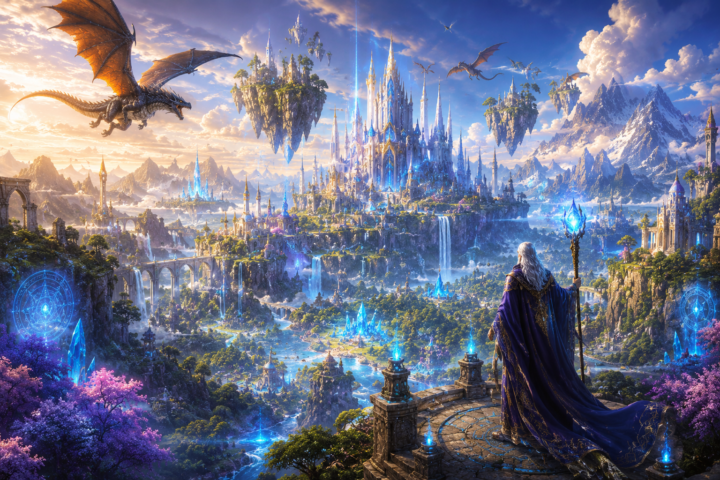
What makes a world “high” fantasy? The completeness of its invention. A high fantasy world isn’t our world with magic layered on top. It’s a world built from scratch, where the author has decided everything what the stars look like, what people eat, what they believe, what they fear.
This differs from low fantasy, which is set in our recognizable world with fantasy elements introduced into it. Harry Potter is low fantasy it’s set in Britain, in schools and train stations you could visit. The magic is the anomaly. In high fantasy, magic and the world itself are the baseline.
Where Did the Term Come From?
Lloyd Alexander author of The Chronicles of Prydain coined “high fantasy” in 1971. He used “high” to mean elevated from our reality, not superior in quality. It was a geographical metaphor, not a value judgment. Worth knowing, because people sometimes assume high fantasy means “better” or “more serious.” It means neither.
What Is Epic Fantasy? The “What” Question
Now here’s where people get tangled. Epic fantasy answers a completely different question not where, but what is the scale of this story?
Epic fantasy is defined by scope. The conflict must be enormous civilization-threatening, world-ending, or at minimum kingdom-defining. The cast is large. The page count is almost always substantial. Multiple plotlines weave together. The stakes are existential.
Epic fantasy is a story where everything is on the line. The dark lord isn’t trying to steal someone’s horse. He’s trying to extinguish all light from the world. The hero isn’t solving a personal problem. He’s carrying the weight of every living thing on his shoulders.
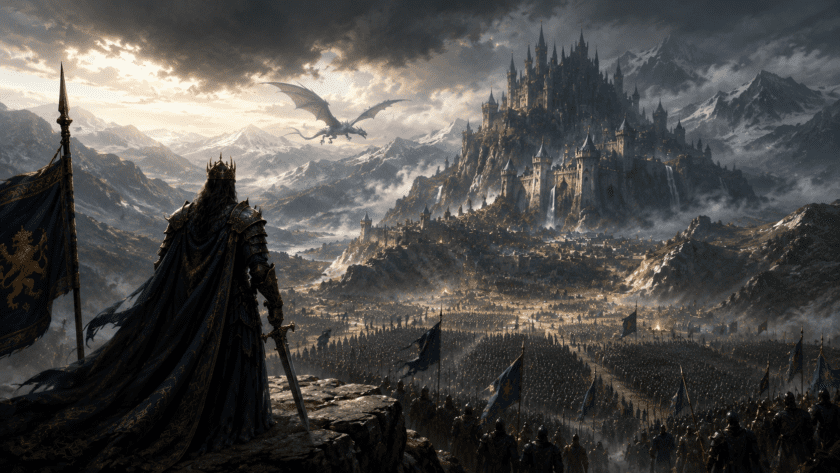
Think of the signals: a quest narrative moving characters across a vast landscape, armies clashing in set-piece battles, prophecies unfolding across generations, a clear good-versus-evil moral framework. The scale is the defining element. Not the setting.
Fantasy isn’t just holding steady it’s accelerating. Science fiction and fantasy sales in the UK rose 41.3% in value in 2024, adding roughly £25 million to the category, according to NielsenIQ BookData reporting ahead of the 2025 London Book Fair. Romantasy is the loudest driver of that growth, but epic and high fantasy’s core readership hasn’t gone anywhere it’s just sharing shelf space with new subgenres now.
The Shape of an Epic Story
If high fantasy is a checklist of world traits, epic fantasy is closer to a set of story mechanics. Three show up again and again.
A clear moral architecture. Most epic fantasy runs on a good-versus-evil frame a dark lord, a coming darkness, an army that must be stopped. This isn’t a weakness of the genre; it’s what lets the stakes register instantly. Not every epic plays it straight (The First Law trilogy blurs it deliberately), but even grey-morality epics need something the reader can measure the stakes against.
The quest as delivery mechanism. A quest narrative isn’t just “characters travel.” It’s how epic fantasy solves a structural problem: how do you show a reader an entire invented world without stopping the plot to give them a tour? Send the hero across it. Frodo walking to Mordor, Rand al’Thor crossing half a continent it’s world-building and plot advancing in the same motion.
The reluctant hero. Epic fantasy leans hard on a specific archetype: an ordinary, often overlooked person who turns out to be central to the world’s fate. Farm boys, orphans, and “nobodies” Luke Skywalker, Rand al’Thor, Harry Potter recur because they let the reader enter the story from ground level before the scale expands around them. It’s a deliberate choice, not a cliché by accident: it makes an impossibly large conflict feel navigable.
The Key Difference One Clear Framework
This is the distinction that makes everything else make sense:
High fantasy = the world (setting) Epic fantasy = the story (scale and stakes)
One is the container. The other is what you put inside it.
| High Fantasy | Epic Fantasy | |
|---|---|---|
| Defined by | Setting secondary world | Scale world-ending stakes |
| Key question | Where does this happen? | How big is this conflict? |
| Opposite | Low fantasy (set in our world) | Personal/intimate fantasy (small stakes) |
| Must have | Invented secondary world | Civilization-level threat |
| Can exist without the other? | Yes | Yes |
Can a Story Be Both? Yes Most Famous Examples Are
This is where most readers’ confusion comes from. The books everyone points to as defining the genre are almost always both simultaneously.
- The Lord of the Rings: Set in Middle-earth (high fantasy ✓).
- Concerns the fate of all living things against Sauron (epic fantasy ✓). Both.
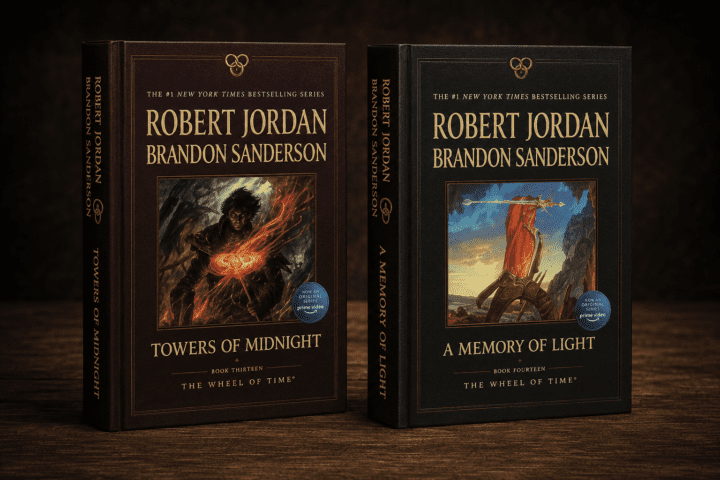
- The Wheel of Time: Secondary world with the One Power (high fantasy ✓).
- Fourteen books about the Last Battle for creation itself (epic fantasy ✓). Both.
- A Song of Ice and Fire: Set in Westeros and Essos (high fantasy ✓).
- War of kings, White Walkers threatening all life, civilizations crumbling (epic fantasy ✓). Both.
Because every canonical example people learn the genre from is both, they assume the terms are synonymous. They aren’t. Understanding the difference unlocks a subtler reading of the genre.
- 15 Found Family Fantasy Books That Hit Hardest in 2026
- 14 Fantasy Books with Elves and Dwarves Picks That Go Beyond Tolkien
High Fantasy Without Epic Scale
Imagine a world as richly invented as Middle-earth its own languages, maps, mythologies, creatures but the story within it is intimate. A baker who uses forbidden magic to win a competition. A romance between two scholars in a library spanning a mountain.
This is high fantasy. It is not epic fantasy. The world is secondary and invented. The stakes are personal, not civilizational.
The Name of the Wind by Patrick Rothfuss lives here. The Four Corners of Civilization is an elaborate secondary world. But Kvothe’s story in Book 1 is essentially about a gifted orphan trying to get into a university. Personal stakes. High fantasy setting. Not epic fantasy at least not yet.
Epic Fantasy Without a Secondary World
Rarer but possible. A story set in our world or a thin fictional version of it with world-ending stakes and civilization-level conflict.
Some historical fantasy works this way. A story set in our ancient Rome, with magic added, where the fate of the empire hangs in the balance. Epic stakes. Low fantasy setting. Epic fantasy without high fantasy.
What Kind of Reader Are You?
Now that you understand the framework, here’s the practical question which one are you actually looking for?
| If you want… | You are looking for… | Start with… |
|---|---|---|
| Immersive world-building, invented maps, new magic systems | High fantasy | The Name of the Wind ( Rothfuss ) |
| World-ending stakes, huge cast, armies and prophecy | Epic fantasy | The Wheel of Time (Jordan) |
| Both rich secondary world AND civilizational stakes | High epic fantasy | The Lord of the Rings (Tolkien) |
| High fantasy but personal and intimate | High fantasy, non-epic | The Lies of Locke Lamora ( Lynch) |
| Epic stakes but our familiar world | Epic low fantasy | Jonathan Strange & Mr Norrell (Clarke) |
Examples That Clarify the Line
Clearly both high and epic: The Lord of the Rings Tolkien. The Stormlight Archive Sanderson. The Wheel of Time Jordan. The First Law Trilogy Abercrombie.
High fantasy, not necessarily epic: The Name of the Wind Rothfuss (world-building rich, personal stakes in Book 1). The Lies of Locke Lamora Lynch (secondary world, heist story, not world-ending). These are secondary worlds with intimate stories inside them.
Epic stakes, lower fantasy setting: Jonathan Strange & Mr Norrell Clarke (set in our Napoleonic England, enormous consequence). The Poppy War Kuang (history-adjacent secondary world, epic military scale). These carry civilizational weight without complete secondary-world invention.
Why Knowing This Changes How You Find Books
Here is the practical payoff. When you tell a bookseller “I want more high fantasy,” you’re saying: I want to disappear into an invented world. I want maps and languages and creatures I’ve never encountered. The stakes of the story matter less than the richness of the world.
When you say “I want epic fantasy,” you’re saying: I want huge stakes. I want everything to matter. I want battles that shake the earth and prophecies that span generations.
These are different cravings. Conflating the terms means you end up with books that satisfy one but not the other which is why readers sometimes finish something technically brilliant and feel vaguely disappointed without knowing why.
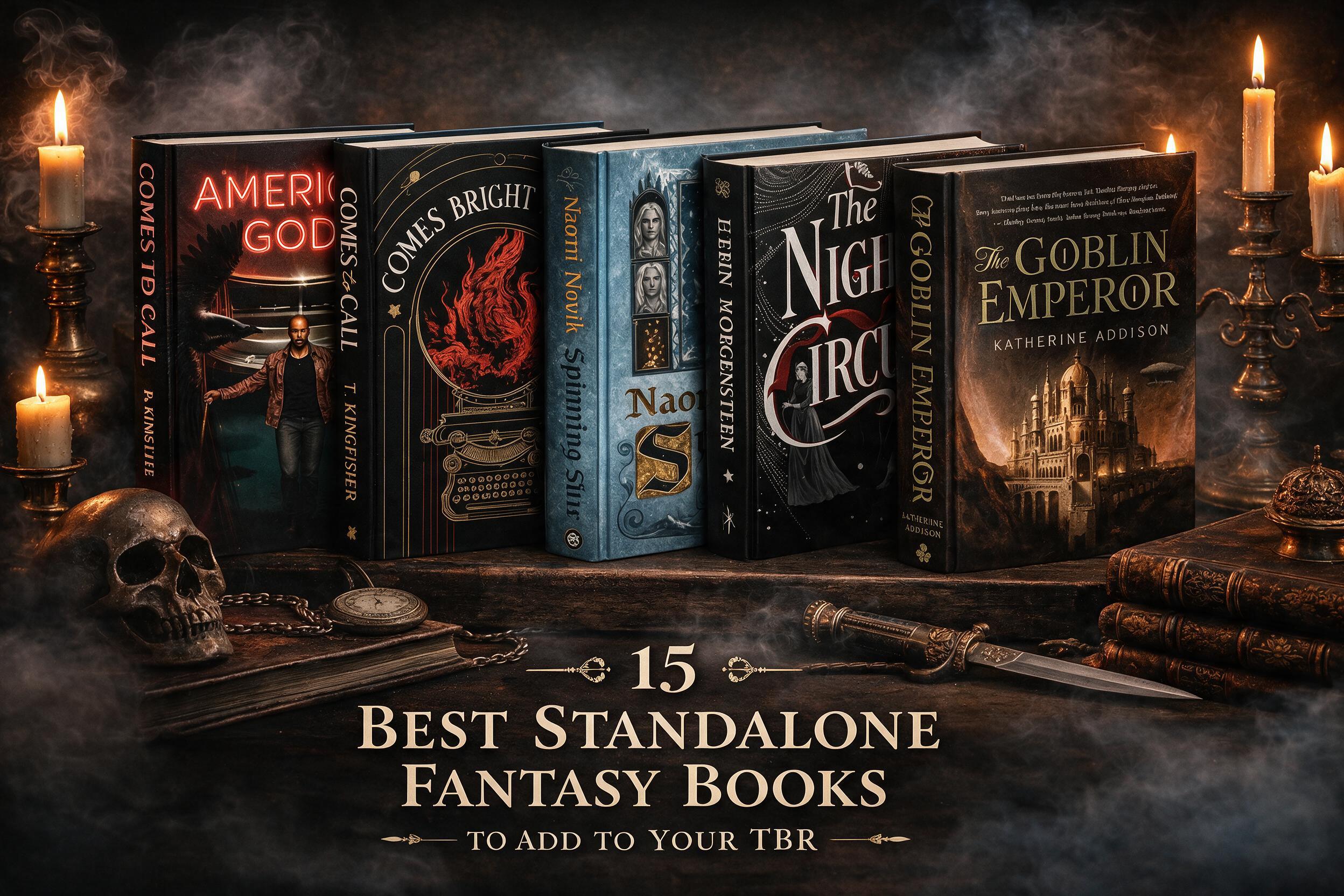
Related Post: 15 Best Standalone Fantasy Books in 2026 That Tell a Complete Story
I’ve had that experience. Books that were exquisitely world-built but had personal, quiet stakes and I’d gone in expecting world-ending drama. The distinction, understood upfront, would have saved that confusion entirely.
The State of These Terms in 2026
Fantasy has diversified enormously. In 2026, readers navigate romantasy, grimdark, dark academia fantasy, cozy fantasy, progression fantasy subcategories that would have been unrecognizable labels fifteen years ago. The old broad terms “high fantasy” and “epic fantasy” are used increasingly loosely precisely because the genre has expanded well beyond them.
However, the underlying concepts remain useful. Understanding that setting and scale are two separate axes and that any fantasy story can be mapped on both independently gives you a more powerful framework than any genre label.
A story can be high-setting (secondary world) and small-scale (intimate stakes). Or low-setting (our world) and massive-scale (epic stakes). Or both. Or neither. Knowing which combination you want is the most efficient route to books that actually satisfy.
Frequently Asked Questions
Is Harry Potter high fantasy or epic fantasy?
Neither fully, and this is a great illustration of the distinction. Harry Potter is not high fantasy the story is set in our world, Britain, with a hidden magical layer. That’s low fantasy. However, it is epic fantasy in terms of scale by the later books Voldemort’s threat extends to the entire wizarding world, armies form, and the conflict is civilizational. Harry Potter is epic low fantasy, which sounds paradoxical until you understand the two terms describe entirely different axes.
Is Game of Thrones high fantasy?
Yes. Westeros and Essos are fully invented secondary worlds not Earth. That makes it high fantasy by definition. It is also epic fantasy in scale the stakes involving the White Walkers are explicitly world-ending. A Song of Ice and Fire is both high and epic, though earlier books lean more intimate than the term “epic” might suggest.
What is the difference between epic fantasy and grimdark?
Epic fantasy describes scale world-ending stakes, large cast, civilization-level conflict. Grimdark describes tone moral ambiguity, bleakness, absence of easy heroism, violence without glamour. A story can be epic in scale and grimdark in tone The First Law Trilogy is both. Or epic without grimdark The Wheel of Time is largely hopeful. Or grimdark without being epic some very intimate brutal character studies qualify. They describe different things entirely.
What is the opposite of high fantasy?
Low fantasy any fantasy set in our recognizable world with fantasy elements introduced into it. Harry Potter, urban fantasy (magic in modern cities), and historical fantasy (magic in real historical settings) are all forms of low fantasy. The fantasy is the anomaly. In high fantasy, the entire world is the fantasy.
Which should I read first high fantasy or epic fantasy?
If you’re new to the genre, start with something that is both a secondary world with epic stakes because those are the books most people mean when they say “classic fantasy.” Mistborn Era One by Brandon Sanderson is the strongest modern entry point: invented world, hard magic system, world-ending stakes, three complete books. From there, you’ll know which axis setting richness or story scale pulled you more, and you can chase that specifically.
What’s the opposite of epic fantasy?
There isn’t a clean single-word opposite, but the contrast is a story with personal, low-key stakes rather than a world-ending threat. A wizard cramming for exams, a duel over inherited land, a heist with no civilization on the line these are sometimes called “personal fantasy” or just left unlabeled. If nothing bigger than the characters’ own lives is at risk, it isn’t epic fantasy, no matter how big the world around it is.
Can a story be a sprawling saga without being high fantasy?
Yes and it’s a useful edge case. A ten-book series about a hidden magical war fought entirely in present-day cities has every structural feature of epic fantasy (huge cast, world-ending stakes, generational scope) but is set in our world, not an invented one. That makes it epic low fantasy: all the scale of the genre, none of the secondary-world setting. It’s proof that “epic” and “high” really are separate dials, not two words for the same thing.
Where to Go Next
This is one part of our complete fantasy reading hub. The best fantasy books guide maps the full genre landscape and connects major subgenres to specific recommendations. If the epic scale of the examples above is what excites you, the best fantasy series to binge covers the longest complete series available in 2026. If the world-building side the magic systems, invented creatures, secondary world rules is what genuinely thrills you, our complete magic systems guide goes deep on how authors build and use magic in secondary worlds.
Understanding the difference between epic fantasy and high fantasy is one of those small pieces of genre knowledge that pays dividends every time you reach for a new book. Use it well.
Hi, I’m Nisbah – a blogger with over 2 years of experience creating content and a fantasy enthusiast who loves exploring magical worlds, fantasy books, captivating stories, and unforgettable characters. I share book recommendations, reviews, fantasy insights, and story discussions and creating guides to help readers discover their next great adventure.