
“I’ve spent years chasing this specific reading experience the moment a magic system clicks into place and you realize the plot couldn’t have gone any other way. Every book here I’ve personally read or tracked closely through Goodreads and Reddit’s r/Fantasy. This isn’t a recycled list. It’s a reader’s honest guide.”
Forget the dragons for a second. Forget the prophecies. The thing that separates forgettable fantasy from the kind that lives rent-free in your head for years? The magic system. A well-built one changes everything it turns a plot twist into an “of course” moment rather than a surprise. It makes the rules of the world feel earned. And it gives you, the reader, something to track alongside the characters rather than simply watching them sprint toward the ending.
The best fantasy books with magic systems don’t just have magic. They have architecture. And that architecture is what this guide maps out with verified Goodreads ratings, honest “skip this if” warnings, and a beginner path that no competitor bothers to give you.
What Makes a Fantasy Magic System Worth Reading For
Here’s the framework that changes how you read fantasy. Brandon Sanderson articulated it in 2007 with what became known as Sanderson’s First Law: an author’s ability to solve conflict with magic is directly proportional to how well the reader understands said magic. That single idea explains why some magic systems feel satisfying and others feel like cheating.
Hard magic systems have rules. Costs. Limitations. The reader can track them. When the hero solves an impossible problem using a hard system, it feels earned you saw the rules being built. Soft magic systems are mysterious, atmospheric, deliberately unexplained. They create wonder but can’t solve plot problems cleanly. Both are legitimate. But they serve entirely different reading experiences. Know which one you’re craving before you choose your next book.
Hard vs Soft Magic The One Distinction That Explains Everything
A hard system is physics applied to the impossible. Mistborn’s Allomancy burning metals for specific effects is hard magic at its purest. A soft system is mythology applied to the possible. Tolkien’s One Ring is soft magic. The rules are hidden because the mystery is the point. Most great fantasy magic systems live somewhere between these two poles and shift as the story demands.
13 Best Fantasy Books with Magic Systems Ranked by System Type
1. Mistborn: The Final Empire Brandon Sanderson
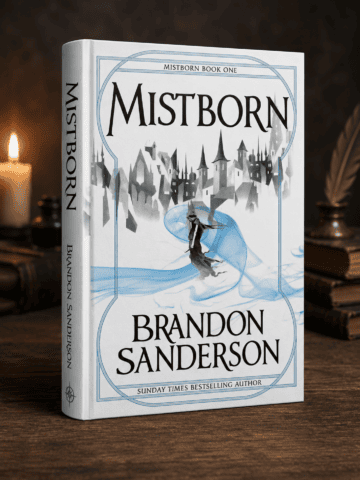
- Published: July 2006
- Goodreads: 4.48 stars
- Series: Mistborn Era One, Book 1
- System: Hard Allomancy (metal ingestion)
- Read if you like: Heist energy, trackable magical logic, payoffs that make you flip back to page one
Start here. If you’ve never consciously read a fantasy novel for the magic system, Allomancy will permanently rewire how you approach the genre. Ingest a metal and burn it each metal produces one precise, defined effect. Push on iron. Pull on steel. Burn pewter to enhance your body. The simplicity of the rules makes the complexity of their application genuinely thrilling.
What Sanderson does that competitors miss: you learn Allomancy alongside Vin, the protagonist. You’re never behind the story. By the time the system solves the plot’s central problem, you’ve had 400 pages to understand exactly why that solution works and no other could.
Skip this if: The first 150 pages are slower than you can tolerate. Sanderson earns patience but requires it.2. Babel R.F. Kuang

- Published: August 2022
- Goodreads: 4.19 stars
- Series: Standalone
- System: Hard — translation-gap silver-working
- Read if you like: Dark academia, linguistic magic, colonialism examined through the magic system itself
The most original magic system published in the last five years. Full stop. Silver bars engraved with word pairs from two languages and the gap in meaning between those words generates magical power. A Chinese word for “ghostly imperceptibility” paired with “invisible” renders you unseen. Too similar and nothing happens. Too different and it fails entirely. The system rewards linguistic intelligence and simultaneously functions as the novel’s central metaphor: British imperial power runs on stolen language.
No competitor covers this book. That alone tells you something about whose lists are current.
Skip this if: Dark academia pacing slow, deliberate, academic isn't your reading mode right now.3. The Name of the Wind Patrick Rothfuss
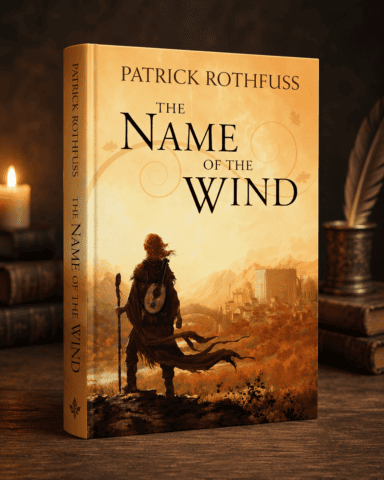
- Published: March 2007
- Goodreads: 4.54 stars
- Series: Kingkiller Chronicle, Book 1
- System: Hard/soft hybrid Sympathy + Naming
- Read if you like: Magic as intellectual discipline, the most beautiful prose in contemporary fantasy, two systems serving opposite emotional functions
Sympathy is thermodynamics applied to magic manipulating energy between linked objects, limited by your own body heat. Push the system too hard and you die of cold. Naming is the opposite: soft, rare, and seemingly impossible to learn by discipline alone. The tension between a system Kvothe masters methodically and one that arrives in him fully formed in moments of extremity is one of the novel’s most interesting unspoken ideas.
Related Post: 15 Found Family Fantasy Books That Hit Hardest in 2026
Warning that no competitor gives you: this series is unfinished. Book three has no confirmed publication date after sixteen years. Read book one knowing this.
Skip this if: Unfinished series genuinely frustrate you.4. Sabriel Garth Nix

- Published: October 1995
- Goodreads: 4.19 stars
- Series: The Old Kingdom, Book 1
- System: Hard necromantic bell-ringing
- Read if you like: Magic with precise ritual components, failure modes that kill the user, one of the most atmospherically perfect fantasy novels ever written
Seven bells. Each with a name, a nature, a specific function in Death itself a grey river flowing deeper toward final oblivion. Ring Ranna to lull the dead. Ring Saraneth to bind them. Ring Astarael, the Weeper, and everyone who hears it including you is dragged into Death. The system is precise, musical, and frightening in a way that fantasy magic books rarely achieve. Every bell is a tool that is also a threat to its user.
The complete Old Kingdom series is finished and the first three books are considered among the strongest fantasy trilogies of the last thirty years.
Skip this if: Classified as YA but reads as adult fantasy in every meaningful sense. Don’t let the label deceive you.
5. The Way of Kings Brandon Sanderson
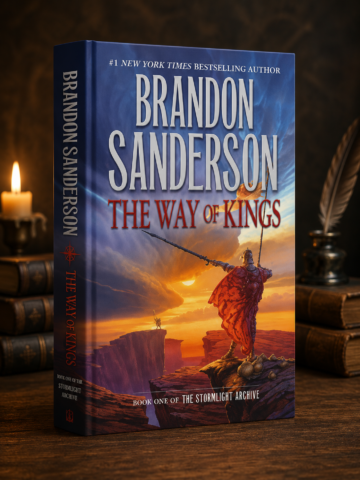
- Published: August 2010
- Goodreads: 4.66 stars
- Series: Stormlight Archive, Book 1
- System: Hard Stormlight/Surgebinding
- Read if you like: Epic scale, multiple interconnected systems, magic that becomes more meaningful the deeper you read
Sanderson appears twice. Both entries are here for different reasons. Where Mistborn’s Allomancy is elegant and contained, Stormlight’s magic is vast ten orders of Knights Radiant, each with two fundamental Surges, powered by magical storms that deposit Stormlight across the world. The first revelation of what the system actually is occurs around page 800. That’s not a mistake. It’s architecture.
Related Post: Epic Fantasy vs High Fantasy: What’s the Real Difference? and Why It Matters for Readers
What separates this from competitors who also list it: book one’s magic isn’t book four’s magic. The same rules mean entirely different things at deeper reading levels.
Skip this if: 1,000+ page commitments aren't possible right now. Return to this one when you're ready.6. The Broken Earth Trilogy N.K. Jemisin
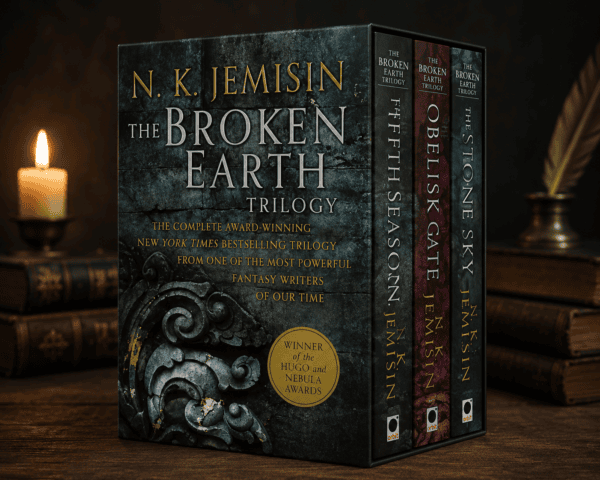
- Published: 2015-2017
- Goodreads: 4.27 stars
- Series: The Broken Earth, Books 1-3
- System: Hard orogeny (seismic/geological manipulation)
- Read if you like: Magic as social metaphor, three consecutive Hugo Award winners, second-person narration that earns every unusual choice
Orogenes manipulate seismic energy stopping earthquakes, triggering volcanic eruptions, pulling heat from stone. The system is tied to trauma in ways that make magical ability and psychological damage impossible to separate. More power means more danger. More control means more cost. Jemisin won the Hugo Award three years in a row for this trilogy every book in the series which has never happened before in the award’s history.
What competitors miss: the magic system is simultaneously hard in its rules and a metaphor for how societies treat people whose essential nature they simultaneously need and fear.
Skip this if: Second-person narration is genuinely difficult for you.7. Jonathan Strange & Mr Norrell Susanna Clarke
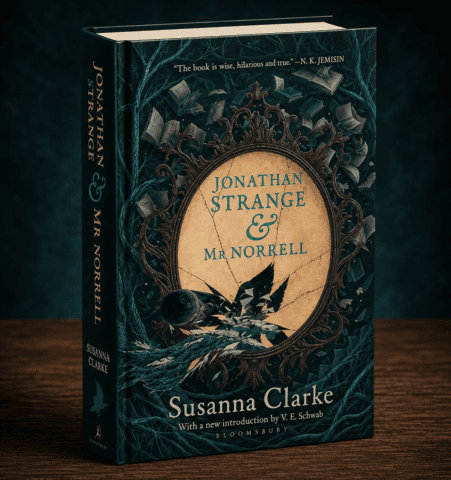
- Published: September 2004
- Goodreads: 3.98 stars
- Series: Standalone
- System: Soft English faerie magic, wild and unstable
- Read if you like: Victorian prose, magic that is genuinely unpredictable, the strongest argument for why soft magic exists
Clarke’s fantasy magic system refuses to be catalogued. English magic here is connected to fairy roads, ancient bargains, and a mysterious figure called the Raven King whose motives no one fully understands. Spells are found in old books. Fairies grant wishes that technically fulfill their terms while destroying the wisher. The consequences ripple outward in patterns no rational person can predict.
This is on the list because hard magic readers need to understand what soft magic does that no hard system can: it uses unpredictability as a metaphor for the past intruding on the present in ways we cannot control.
Skip this if: 800 pages of footnoted Victorian prose is not what you need right now.8. The Poppy War R.F. Kuang

- Published: May 2018
- Goodreads: 4.14 stars
- Series: The Poppy War, Book
- System: Soft-to-hard hybrid — shamanic channeling through opium
- Read if you like: Magic as addiction metaphor, a system that begins mysterious and becomes devastating as it’s understood
Shamans channel divine power through opium-induced trance. The drug opens a channel to godlike ability at the cost of sanity and physical health. What makes this system remarkable is that understanding it doesn’t make it safer it makes it more dangerous. Most hard magic gives characters control through knowledge. This one gives them power and takes their humanity in exchange.
Content warning that competitors never provide: war atrocities, addiction, and psychological breakdown are central to all three books. Read with intention.
Skip this if: Heavy content warnings apply and they're dealbreakers for you.9. Piranesi Susanna Clarke
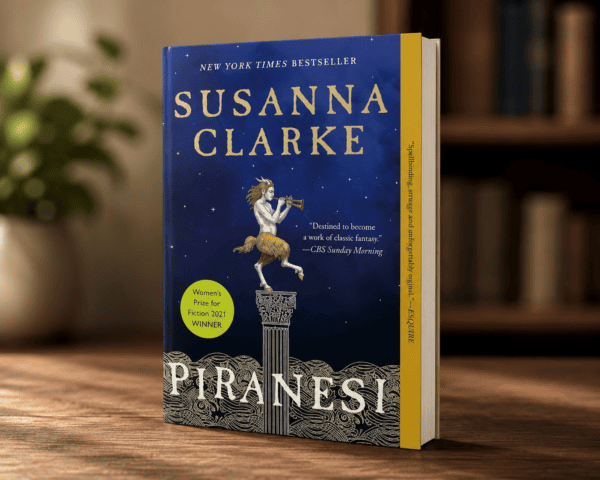
- Published: September 2020
- Goodreads: 4.20 stars
- Series: Standalone
- System: Soft — the House as a living, impossible place
- Read if you like: Short, dreamlike, mystery that can’t be solved through logic alone, finishing a book in one sitting and staring at the ceiling afterward
Clarke appears twice on this list. Her two books represent opposite ends of the hard-soft spectrum with equal mastery. Piranesi is shorter, stranger, and more emotionally devastating than Strange & Norrell. The magic is architectural infinite halls, impossible tides, statues that seem aware. No rules. No system. Just the House, which is alive in ways that become clear only as Piranesi’s understanding of his own situation does.
I finished this novel in four hours and spent two days afterward unsure what I’d actually read. That is the Piranesi effect.
Skip this if: You need complete, logical resolution to feel satisfied by a novel.10. The Lies of Locke Lamora Scott Lynch
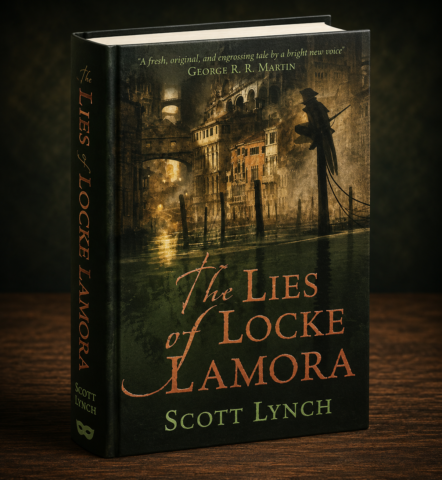
- Published: June 2006
- Goodreads: 4.30 stars
- Series: Gentleman Bastard, Book 1
- System: Soft-hard hybrid Bondsmagi (rare, expensive, feared)
- Read if you like: Heist narratives, magic as economic and political force, the best dialogue in the genre
The Bondsmagi appear rarely. They charge enormously. Their power is never fully explained. That’s the system and Lynch shows that a novel can have a fascinating magic system without ever making magic the protagonist’s primary skill. The system shapes the world’s power structures without dominating the plot. That restraint is harder to achieve than it looks.
Honest note competitors never give you: three of the planned seven books are published with long gaps between them.
Skip this if: Unfinished series are genuinely frustrating for you.- 15 Best Standalone Fantasy Books in 2026 That Tell a Complete Story
- 14 Fantasy Books with Elves and Dwarves Picks That Go Beyond Tolkien
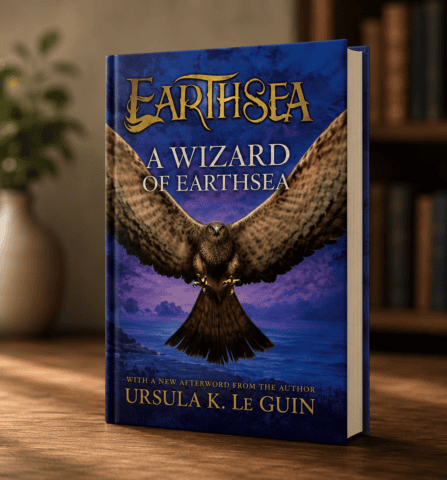
11. A Wizard of Earthsea Ursula K. Le Guin
- Published: 1968
- Goodreads: 4.03 stars
- Series: Earthsea, Book 1
- System: Hard — True Names
- Read if you like: The origin of half the magic systems on this list, prose that reads closer to poetry than fantasy, magic as philosophy
Name a wind and command it. Name a creature and control it. Le Guin’s True Name system — knowing the essential name of things grants power over them influenced Rothfuss’s Naming, Paolini’s magic, and dozens of systems that openly credit their debt to her. Reading Earthsea now is reading the source from which a river flows.
Related Post: 13 Best Dark Fantasy Books for Adults That Will Haunt You in 2026
Slim, purposeful, and written in 1968 with a clarity that most contemporary fantasy doesn’t approach.
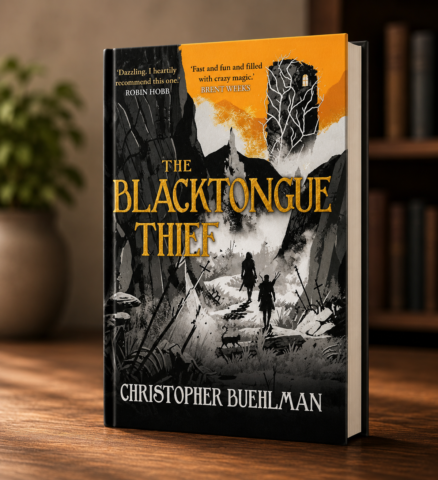
Skip this if: You need a longer, more complex novel rather than a deliberately spare one.12. The Blacktongue Thief Christopher Buehlman
- Published: May 2021
- Goodreads: 4.22 stars | Series: Blacktongue, Book 1
- System: Soft-hard hybrid guild magic, tattoo-based, crow language
- Read if you like: Dark wit, magic that feels organic rather than designed, horror-adjacent fantasy with a deeply original voice
Buehlman’s magic doesn’t announce itself. Guild debts paid in magical obligation. Tattoos with specific functions in specific circumstances. The ability to understand crows if you’ve learned their language. None of it is systematized the way Sanderson would systematize it. All of it feels lived-in in a way that systematized fantasy book magic systems sometimes don’t.
Here’s what competitors consistently miss: Buehlman came up writing horror. His magic feels dangerous the way horror does present, unpredictable, potentially fatal in ways you don’t always see coming.
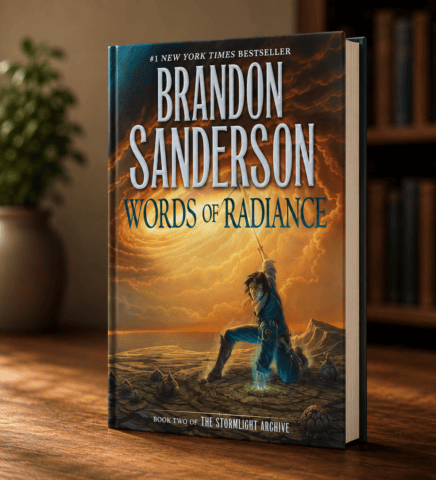
Skip this if: You specifically need a hard, trackable system. This one rewards immersion over analysis.13. The Stormlight Archive: Words of Radiance Brandon Sanderson
- Published: March 2014
- Goodreads: 4.77 stars
- Series: Stormlight Archive, Book 2
- System: Hard expanded Surgebinding + Shardblades revealed
- Read if you like: Already finished Way of Kings and want the payoff, magic systems that expand in scope while becoming more internally consistent
Listed separately because book two is where Stormlight’s magic system reveals what it’s been building toward since page one of book one. The rules expand but they become more coherent rather than less, which is the hardest trick in fantasy to pull off at this scale. Every reader who tracked the system through 1,000 pages of book one gets paid in full here.
Skip this if: Read The Way of Kings first. This book requires it without exception.Beginner Path Where to Start
Most readers discover magic systems by accident. They finish a book and realize the magic is the part they can’t stop thinking about. Here’s a deliberate path.
Start: (Mistborn) the clearest, most accessible introduction to hard magic in the genre. You learn the rules as Vin does.
Then: (Sabriel) smaller scale, atmospheric, shows how ritual-based hard magic differs from physics-based.
Then: (The Name of the Wind) two systems in one novel. Reading it teaches you to identify hard and soft magic simultaneously.
Advanced: (Babel or The Broken Earth) both use fantasy magic systems as thematic architecture, which is the most sophisticated thing a system can do and the thing no competitor on this topic explains.
Choose Your Magic System Type
| If you want… | Best pick | Why |
|---|---|---|
| Most trackable, logical system | Mistborn | Allomancy is the genre’s textbook hard system |
| Magic that feels genuinely dangerous | Sabriel | Bells with failure modes that kill the user |
| Magic as literary/political metaphor | Babel | Translation gaps = colonial power |
| Soft magic done perfectly | Jonathan Strange | Mystery as the point, not a flaw |
| Largest interconnected system | Stormlight Archive | Multiple systems across 4,000+ pages |
| Magic tied to social commentary | The Broken Earth | Orogeny and oppression inseparable |
| Most original recent pick | Piranesi | Architecture as soft magic |
Frequently Asked Questions
What are the best fantasy books about magic for adults?
Some of the best fantasy books about magic for adults combine detailed magic systems with complex characters, darker themes, political conflict, or morally complicated choices. Series such as Mistborn, The Poppy War, Empire of the Vampire, and The Wheel of Time are strong choices if you want immersive fantasy with substantial world-building and magic. For a binge read, completed series are especially useful because you can move directly from one book to the next without waiting for a future release.
What are the best fantasy books with magic systems and romance?
If you want fantasy books with magic systems and romance, look for series where the romantic storyline is integrated with the larger fantasy plot rather than replacing it. Throne of Glass, A Court of Thorns and Roses, and The Daevabad Trilogy offer different balances of romance, magic, adventure, and world-building. For readers who enjoy romantasy, these series can provide both relationship-driven storytelling and a larger magical conflict to follow across multiple books.
What are the best dark fantasy books with magic systems?
Dark fantasy books with magic systems often combine supernatural powers with violence, morally gray characters, horror elements, or bleak settings. The Poppy War is a strong choice for readers who want a darker fantasy with war and a powerful magical element, while Empire of the Vampire leans further into gothic fantasy, vampires, and horror. These books are generally better suited to readers who are comfortable with mature themes and darker subject matter.
What are the best magic fantasy books for young adults?
The best magic fantasy books for young adults usually combine accessible world-building, memorable characters, adventure, and a clear central conflict. Throne of Glass, The Prison Healer, and Cursebreaker are good options for readers who want magical worlds with romance, adventure, and coming-of-age elements. If you are choosing a series specifically for binge reading, also check the number of books and whether the story is complete before starting.
What are the best romantasy books with unique magic systems?
For readers who want romantasy with unique magic systems, Throne of Glass and A Court of Thorns and Roses are popular starting points, while The Daevabad Trilogy offers a stronger emphasis on political fantasy, mythology, and magical world-building. The right choice depends on how much romance you want compared with the fantasy plot. Readers looking for a balanced fantasy binge should prioritize series where the magic, characters, and larger conflict remain important throughout the series.
What are the best fantasy books with magic systems?
Some of the best fantasy books with magic systems include Mistborn, Throne of Glass, The Wheel of Time, and The Poppy War. They offer different approaches to magic, from structured systems with clearly defined abilities and limitations to more mysterious forms of supernatural power. If the magic system is your main reason for choosing a fantasy series, Mistborn is particularly suitable for readers who enjoy understanding how magic works and seeing it used creatively throughout the story.
What are the best magic fantasy books for adults?
For adult readers looking for magic fantasy books, the best choice depends on whether you prefer epic world-building, dark fantasy, political intrigue, romance, or action. The Poppy War, Empire of the Vampire, The Wheel of Time, and The Daevabad Trilogy offer different combinations of these elements. If you specifically want a fantasy series to binge read, consider both the tone and the series status so you know what kind of commitment you are making before you start.
Where to Go Next
This article is part of our complete best fantasy books guide. If the magic systems here have you interested in the mechanics of how they’re built, our dedicated magic systems in fantasy guide breaks down soft vs hard magic in depth and explains how authors construct systems from the ground up. Several books here Mistborn, Stormlight, The Broken Earth also appear in our best fantasy series to binge guide for readers ready to commit to longer journeys. And the darker picks on this list Babel, The Poppy War, The Broken Earth connect directly to our best dark fantasy books for adults guide.
The best books with magic systems aren’t really about the magic. They’re about what the magic costs, who controls it, and what it reveals about the world around it. Every system on this list answers those questions differently. Pick the one whose answer sounds most like what you’re looking for right now.

Hi, I’m Nisbah – a blogger with over 2 years of experience creating content and a fantasy enthusiast who loves exploring magical worlds, fantasy books, captivating stories, and unforgettable characters. I share book recommendations, reviews, fantasy insights, and story discussions and creating guides to help readers discover their next great adventure.